
Women's Family Therapy
Addition affects the whole family, and so does women's recovery
The Program's Purpose
By the time a woman arrives at Canopy Pines, the people who love her are also carrying something heavy. They have watched her struggle. Many have tried to help in ways that did not help. Some have said things they cannot take back. Some have stayed quiet when they should have spoken. They are exhausted, frightened, and often uncertain what recovery even looks like or what their role in it should be.
Family therapy at Canopy Pines creates a structured clinical space for those relationships to begin moving in a better direction, alongside the work the woman in treatment is doing herself. This is not visiting hours. It is real clinical work, facilitated by a licensed therapist, with specific goals.
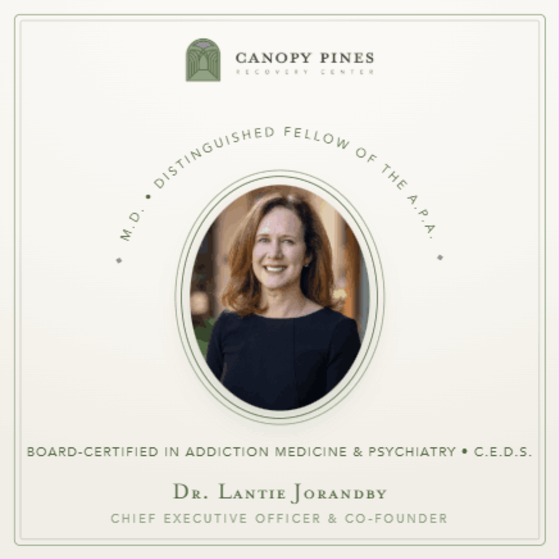
Founded and Led By Dr. Lantie Jorandby
Dr. Lantie Jorandby has dedicated her professional life to treating women with mental illness and addiction, and she is among the most credentialed addiction psychiatrists practicing in the United States today. She is triple board-certified in general psychiatry, addiction psychiatry, and addiction medicine.

How Family Therapy Supports Addiction and Mental Health Recovery
Addiction and mental health struggles rarely affect just one person. By the time a woman enters residential treatment, her family has already been changed by moments that she has experienced.
Family therapy is the clinical process that addresses both sides of that equation. It brings the woman in treatment and her loved ones into a structured, therapist-facilitated sessions designed to diagnose what has broken down, build new patterns of communication, and prepare everyone for what life looks like after residential care ends.
Family therapy in a residential addiction treatment setting is not a single conversation. It is an ongoing process that works through several interconnected areas.
Loved ones often arrive carrying explanations for what has happened that make recovery harder — framing addiction as a moral failure, a choice, or a sign of not caring enough. Psychoeducation in family therapy replaces those frameworks with accurate, clinically grounded information about how substance use disorders develop, how mental health conditions interact with them, and what recovery actually requires.
Daily & Weekly Structure:
How It Works
FAQ'S
Can I call my loved one while she is in treatment?
Communication and visitation policies are individualized and discussed during admissions. Contact is structured to support the therapeutic work, not to cut families off.
What if my loved one refuses treatment?
Call us anyway. We can talk through what options exist, what a family can and cannot do, and what tends to work. We will be honest with you about all of it.
How do I know she is safe?
The clinical team communicates with designated family members according to each woman’s consent and the clinical plan. You will not be left wondering whether she is okay.
What if I cannot travel for family sessions?
Speak with our admissions team. We work to accommodate family members who cannot be present in person.
Highlighted Services
Residential
24 hour evidence-based care that treats addiction and mental health together. Every woman receives a full psychiatric evaluation and a customized treatment plan
Trauma Therapy
We understand that trauma is often deeply connected to substance use, emotional distress, and mental health struggles. Our highlighly certified experts are here to help
Medical Detox
For women who have become dependent, withdrawal can bring dangerous effects, including death. Medical detox at Canopy Pines provides 24-hour clinical oversight.

Medically Reviewed By Dr. Lantie Jorandby
Triple Board-Certified in Psychiatry, Addiction Psychiatry, & Addiction Medicine
Last Reviewed: June 2026