
Aftercare Beyond Residential Treatment
A care plan after residential determines what treatment was worth

What is an Aftercare Program for Women?
Overview
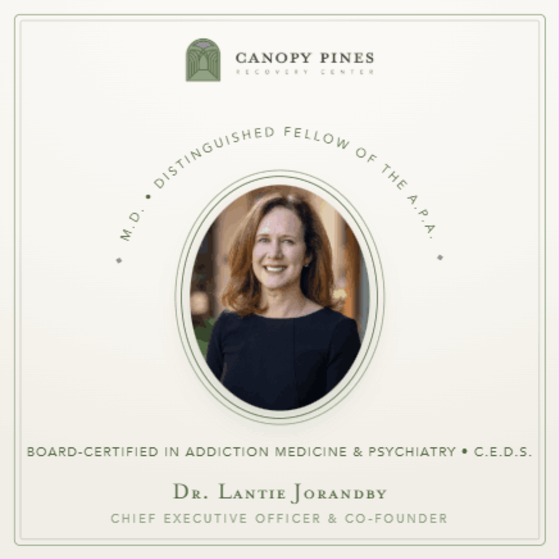
Founded and Led By Dr. Lantie Jorandby
Dr. Lantie Jorandby has dedicated her professional life to treating women with mental illness and addiction, and she is among the most credentialed addiction psychiatrists practicing in the United States today. She is triple board-certified in general psychiatry, addiction psychiatry, and addiction medicine.
Preparation From The Start
Continuing care planning happens in individual sessions throughout residential treatment. A woman works with her therapist and the clinical team to identify her outpatient needs, preferred providers in her home community, peer support options, and the specific personal warning signs and triggers she needs to watch for. This is not a checklist. It is a real clinical conversation that builds week by week.
How It Works

FAQ'S
What if I do not have a therapist at home?
That is exactly what continuing care planning is for. Our team identifies and coordinates outpatient referrals based on where a woman lives, what her insurance covers, and what her specific clinical needs are after residential.
What if I relapse after leaving?
Call us. Relapse is a clinical event, not a moral failure. We will help you figure out what the next step is.
Highlighted Services
Residential
24 hour evidence-based care that treats addiction and mental health together. Every woman receives a full psychiatric evaluation and a customized treatment plan
Trauma Therapy
We understand that trauma is often deeply connected to substance use, emotional distress, and mental health struggles. Our highlighly certified experts are here to help
Medical Detox
For women who have become dependent, withdrawal can bring dangerous effects, including death. Medical detox at Canopy Pines provides 24-hour clinical oversight.

Medically Reviewed By Dr. Lantie Jorandby
Triple Board-Certified in Psychiatry, Addiction Psychiatry, & Addiction Medicine
Last Reviewed: June 2026