
Women's Residential Treatment in Tallahassee, Florida
Structured days, evidence-based treatment, and a supportive environment in Tallahassee, Florida
At A Glance
Therapies: EMDR DBT CBT Individual Equine
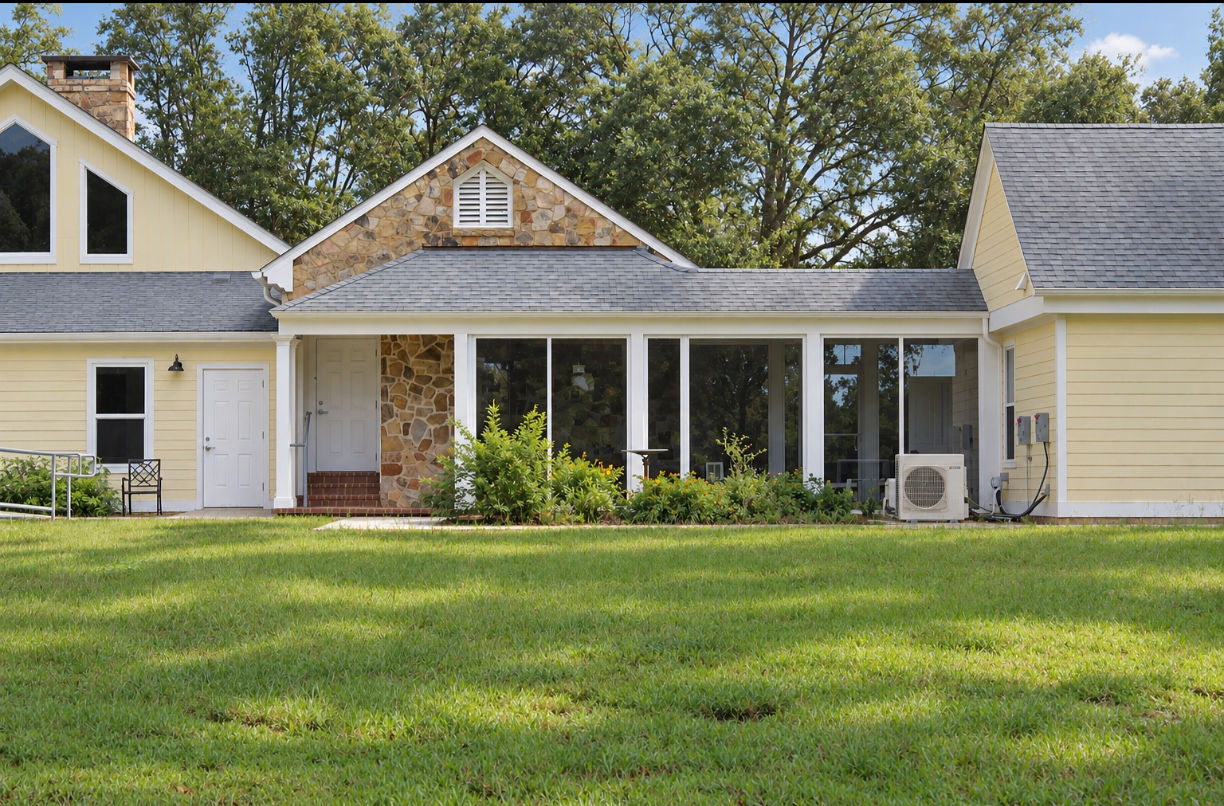
Residential Setting In Tallahassee, Florida
The Mahan Drive property: rural, wooded, room for the barn and pasture, but within reach of the city. Easy access from I-10 and around a 30 minute drive from the Tallahassee International Airport. Serving Leon County, the Big Bend, the Panhandle, and south Georgia. Families nearby can take part in family therapy and visits.
Residential treatment at Canopy Pines is where the core work of recovery happens. Women live on the property for the full course of treatment, which means the therapeutic process is not confined to scheduled sessions. It happens at meals. It happens outside. It happens in the barn, in the pasture, in the quiet between activities when something that has been stuck for years finally begins to move.
Our women-only addiction treatment program in Florida are for those who need full immersion: a complete departure from the environment that has sustained the addiction and a structured, supported space where new patterns can actually take hold. It is for women dealing with addiction alongside depression, anxiety, trauma, PTSD, or other mental health conditions that need to be treated simultaneously by the same clinical team. It is for women who have tried to stop on their own and found that stopping is not the hardest part. Staying stopped is.
How To Get To Canopy Pines Recovery
Canopy Pines is a women-only detox and residential treatment center on 30 acres outside Tallahassee. Treatment is designed and led by Dr. Lantie Jorandby, triple board-certified in psychiatry, addiction psychiatry, and addiction medicine. Here, recovery isn’t rushed. It’s supported by structure, open land, and time in the shade to truly heal. View treatment options
Who Residential Treatment Is Right For?
Typically, people who attend residential treatment fall into one of six categories
- Tried outpatient and relapsed
- Unsafe or triggering home environment
- Have a co-occurring condition that needs treating as well (depression/anxiety/PTSD)
- Are stepping down from detox or a crisis stabilization unit
- Needs 24/7 structure to keep on the path to sobriety
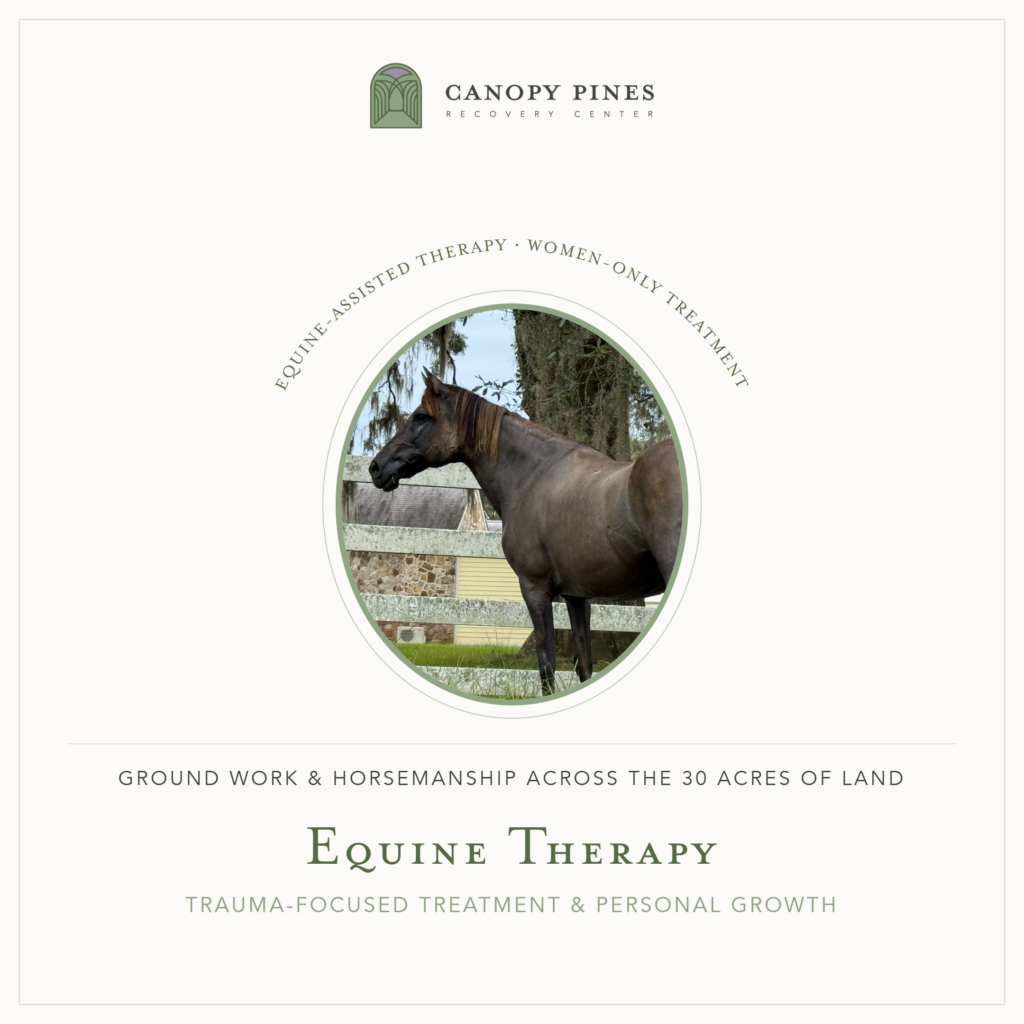
Equine Assisted Therapy Offered
Equine therapy is part of the continuum of evidence-based treatment at Canopy Pines Recovery. It has been shown to offer several benefits for mental health and addiction treatment, including personal growth, self-awareness, and emotional stability. Learn more about the program.
Daily Structure:
About the Program
What is the typical length of stay?
What are the clinical services?
How does admissions work?
A phone call starts the process. Insurance is verified. Clinical information is gathered. A start date is confirmed. Women coming from another detox facility, from a crisis stabilization unit, or directly from home are all welcome. Our admissions team coordinates the transition so nothing falls through the gap.
FAQ'S

Can my family visit?
Yes. Visitation is structured within the treatment plan and timed to coincide with stages of treatment where in-person family contact is clinically appropriate. Specific policies are discussed during admissions.
What if I need medication?
Psychiatric medication is managed entirely within the program by Dr. Jorandby and the clinical team. You do not need an outside provider during treatment.
Is this only for addiction?
No. Canopy Pines treats addiction alongside co-occurring mental health conditions including depression, anxiety, trauma, and PTSD. Most women who arrive here are dealing with more than one thing.
What does a typical week look like?
Multiple individual therapy sessions, daily group therapy, equine-assisted therapy as a scheduled clinical appointment, wellness and mindfulness programming, family therapy when appropriate, and regular psychiatric check-ins. Every week is structured. No day is empty.
What if something comes up at home while I am in treatment?
These situations are handled through the clinical team on a case-by-case basis. The goal is always to protect the integrity of treatment while responding to genuine need.

Medically Reviewed By Dr. Lantie Jorandby
Triple Board-Certified in Psychiatry, Addiction Psychiatry, & Addiction Medicine
Last Reviewed: June 2026