
Cognitive Behavioral Therapy
CBT can be a pivotal part of healing trauma and addiction
Overview
If someone you love is struggling with addiction, anxiety, depression, or unresolved trauma, you’ve likely come across the term cognitive-behavioral therapy (CBT).
But what exactly is it? How does it work specifically for women? Is CBT effective? This article answers every key question clearly so that you, a concerned family member, or healthcare professional can make informed decisions about treatment.
Cognitive-behavioral therapy for women is not a one-size-fits-all approach. Research increasingly shows that women face distinct relapse risk factors — including depression, interpersonal stress, and relationship conflict — that make a gender-responsive CBT framework especially valuable.

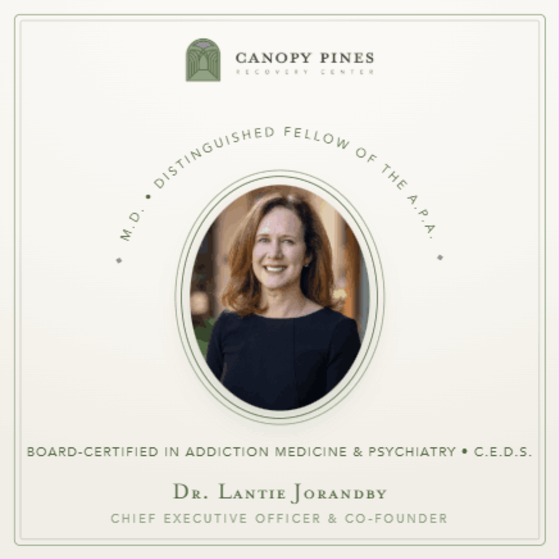
Founded and Led By Dr. Lantie Jorandby
Dr. Lantie Jorandby has dedicated her professional life to treating women with mental illness and addiction, and she is among the most credentialed addiction psychiatrists practicing in the United States today. She is triple board-certified in general psychiatry, addiction psychiatry, and addiction medicine.

What Is Cognitive-Behavioral Therapy?
Cognitive-behavioral therapy, commonly called CBT, is a structured, evidence-based form of psychotherapy that helps individuals recognize and change negative or unhelpful patterns of thinking and behavior.
Rather than focusing on the past alone, CBT is present-oriented and skills-focused — teaching practical tools for every day common situations.
According to the Beck Institute, CBT is based on the principle that how a person perceives a situation is more closely connected to their emotional and behavioral reaction than the situation itself. In other words, it’s not what happens to you — it’s how you interpret and respond to what happens that shapes your mental health.
CBT helps identify distressing thoughts, evaluate how realistic those thoughts are, and — as that awareness grows — begin to feel and behave differently. This cycle of awareness, evaluation, and change is what makes CBT so versatile across so many conditions.
History
CBT was pioneered by Dr. Aaron T. Beck in the 1960s and 1970s, which is why he is globally recognized as the “father of Cognitive Behavior Therapy.” As documented in peer-reviewed literature, Dr. Beck noticed that his depressed patients experienced automatic negative thoughts about themselves, the world, and the future. When he taught patients to identify and challenge those thoughts, their mood and behavior improved dramatically.
What started as a treatment model for depression eventually expanded. Dr. Beck and his colleagues applied the approach to anxiety, substance use disorders, personality disorders, PTSD, and more. Since then, over 2,000 outcome studies have validated the effectiveness of CBT across a wide spectrum of mental health and medical conditions.

Goals Of Cognitive-Behavioral Therapy at Canopy Pines
1. The Cognitive Model
2. The Connection Between Thoughts, Feelings & Behavior
3. Skill-Building Over Insight Alone
4. Collaboration Between Therapist and Client
5. Goal-Oriented and Measurable Progress
Highlighted Services
Residential
24 hour evidence-based care that treats addiction and mental health together. Every woman receives a full psychiatric evaluation and a customized treatment plan
Trauma Therapy
We understand that trauma is often deeply connected to substance use, emotional distress, and mental health struggles. Our highlighly certified experts are here to help
Medical Detox
For women who have become dependent, withdrawal can bring dangerous effects, including death. Medical detox at Canopy Pines provides 24-hour clinical oversight.
Timeline
CBT is typically a short-term therapy, with many standard courses of treatment running weekly sessions over 2–3 months, though the duration can vary based on the complexity of issues.
For someone managing mild-to-moderate anxiety or depression, a structured 12–16 session program may be sufficient. For those dealing with co-occurring substance use and mental health disorders — which is common among women entering residential treatment — a longer, more integrated course of CBT may be warranted.
The skills learned in CBT are designed to last. Women leave treatment with tools they can use independently — making relapse prevention a built-in component rather than an afterthought.


Why CBT is Especially Beneficial for Women in Addiction Recovery
Research from clinical trials on residential treatment confirms that women’s relapse risk factors are distinctly interpersonal and emotional — including depression, relationship conflict, and social stress. CBT directly addresses these vulnerabilities.
CBT equips women to recognize and respond to their specific cues for substance use, creating a more durable foundation for long-term sobriety.
Studies on relapse prevention demonstrate that CBT plays a significant role by reducing anxiety and depression, improving relationships with others, increasing self-esteem, and enhancing overall quality of life — all critical recovery outcomes for women.
How Effective Is Cognitive-Behavioral Therapy?
For Depression
For Anxiety Disorders
For Addiction and Substance Use
For PTSD and Trauma


Medically Reviewed By Dr. Lantie Jorandby
Triple Board-Certified in Psychiatry, Addiction Psychiatry, & Addiction Medicine
Last Reviewed: June 2026