
Women's Trauma Therapy
Addiction and mental health recovery begins where healing feels safe.
Our Approach
At Canopy Pines, we understand that trauma is often deeply connected to substance use, emotional distress, and mental health struggles. Many women entering treatment have experienced painful life events that continue to affect how they think, feel, relate to others, and cope with stress.
According to data from NESARC, approximately half of all women in the United States will experience at least one traumatic event during their lifetime. Research also shows that women are more likely than men to develop post-traumatic stress disorder (PTSD) following trauma exposure.
These experiences may include childhood trauma, emotional abuse, domestic violence, sexual trauma, grief and loss, abandonment, chronic stress, medical trauma, or years of living in survival mode.
Trauma therapy can help individuals process distressing experiences in a safe and structured environment, reducing symptoms such as anxiety, flashbacks, and emotional distress.
Evidence-based approaches such as trauma-focused cognitive behavioral therapy (TF-CBT), cognitive processing therapy (CPT), and EMDR can improve coping skills and emotional regulation. Over time, trauma therapy can help people strengthen relationships, increase resilience, and regain a greater sense of safety and control in their daily lives.

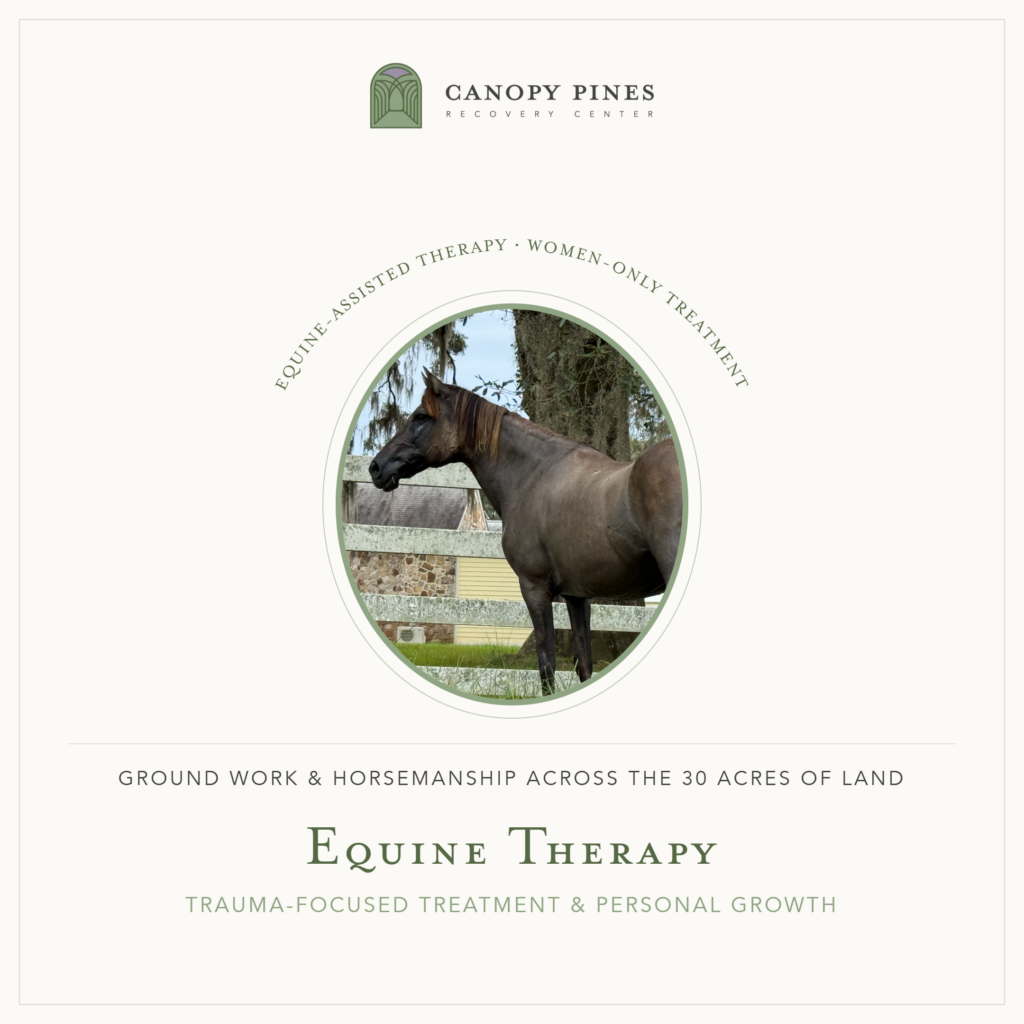
Equine Assisted Therapy Offered
Equine therapy is part of the continuum of evidence-based treatment at Canopy Pines Recovery. It has been shown to offer several benefits for mental health and addiction treatment, including personal growth, self-awareness, and emotional stability. Learn more about the program.

Understanding Trauma's Effect
Trauma is not defined only by what happened to someone—it is also shaped by how the mind and body responded to those experiences.
Many women living with unresolved trauma feel constantly “on edge,” emotionally numb, overwhelmed by emotions, disconnected from themselves, or trapped in unhealthy patterns they struggle to explain. Our clinical team works to help residents understand these responses through a compassionate and nonjudgmental lens.
Trauma can affect:
- Emotional regulation
- Self-worth and identity
- Trust and relationships
- Physical stress responses
- Sleep and concentration
- Impulse control
- Anxiety and hypervigilance
- Shame and guilt
- Ability to feel emotionally safe
Canopy Pines:
A Safe and Stabilizing Therapeutic Environment
Healing from trauma requires emotional safety, trust, consistency, and structure. At Canopy Pines, our approach is designed to create an environment where women feel supported while also being gently guided towards growth and accountability.
Our treatment team recognizes that trauma can influence how individuals respond to authority, relationships, conflict, emotional vulnerability, and treatment itself. Staff are trained to approach residents with empathy, professionalism, emotional attunement, and respect while maintaining healthy boundaries and clear expectations.
The goal is not simply to manage symptoms, but to help women begin rebuilding a sense of internal safety, emotional stability, and personal empowerment.

Evidence-Based Treatment And Activities for Trauma
Evidence-Based Trauma Treatment
Trauma treatment at Canopy Pines is individualized based on each resident’s needs, emotional readiness, and clinical presentation. Treatment approaches may include:
Cognitive Behavioral Therapy (CBT)
Helping residents identify and overcome unhealthy thought patterns, beliefs, and behaviors that contribute to emotional distress and relapses.
Dialectical Behavior Therapy (DBT)
DBT is particularly helpful for women who experience intense emotions, chronic stress, self-destructive behaviors, or relationship instability.
Teaching practical skills for:
- Emotional regulation
- Distress tolerance
- Mindfulness
- Interpersonal effectiveness
- Impulse control
Trauma-Informed Psychotherapy
Helping residents safely explore emotional experiences, identify triggers, increase self-awareness, and develop healthier coping strategies without retraumatization.
EMDR and Accelerated Resolution Therapy (ART)
Specialized trauma-focused therapies may be available when clinically appropriate to assist residents in processing distressing memories and reducing trauma-related symptoms.
Mindfulness and Nervous System Regulation
Residents are introduced to grounding techniques, breathing strategies, mindfulness practices, movement, and body-awareness interventions designed to help regulate the nervous system and improve emotional awareness.
Treating the Whole Person
Trauma impacts more than emotions. It often affects physical health, relationships, self-care, spirituality, and overall quality of life. In fact about 50% of women in the United States will experience at least one traumatic event in their lives.
Our clinical team works collaboratively to help residents build healthier coping mechanisms, improve emotional resilience, strengthen relationships, and develop a foundation for sustainable recovery.
At Canopy Pines, treatment is designed to support whole-person healing through an integrated model that combines:
- Psychiatry and medication management
- Individual therapy
- Group therapy
- Family therapy
- Wellness activities
- Experiential therapies
- Relapse prevention
- Recovery education
- Peer support
Healing With Compassion
and Dignity
Many women entering treatment carry significant shame about their past experiences, emotional struggles, or substance use. At Canopy Pines, we believe healing happens most effectively when women are treated with compassion, dignity, honesty, and respect.
Recovery is not about “fixing” broken people. It is about helping women understand themselves more fully, reconnect with their strengths, and develop the tools needed to move forward with greater stability, confidence, and hope.
We believe that trauma does not have to define a person’s future. With appropriate support, meaningful healing and lasting recovery are possible.

Medically Reviewed By Dr. Lantie Jorandby
Triple Board-Certified in Psychiatry, Addiction Psychiatry, & Addiction Medicine
Last Reviewed: June 2026