
Women's Residential Treatment Center for Bipolar Disorder
Evidence-Based Care Women Should To Know About

Bipolar disorder can feel impossible to understand from the outside — and even harder to live with on the inside. The rapid swings from manic highs to depressive lows, the impulsive decisions made during elevated states, and the exhaustion of a condition that never truly goes away can quietly dismantle relationships, careers, and self-worth over time.
For women specifically, bipolar disorder carries a distinct clinical profile shaped by hormonal biology, higher rates of rapid cycling, and depressive episodes that are frequently mistaken for something else entirely. When outpatient appointments, medication adjustments, and family support are no longer enough to maintain stability, a residential treatment center for bipolar disorder provides the level of care that lasting stabilization requires.
This guide is written for family members, partners, and clinicians supporting a woman who is struggling — and for the women themselves who are searching for real answers about what women’s residential mental health treatment can offer.
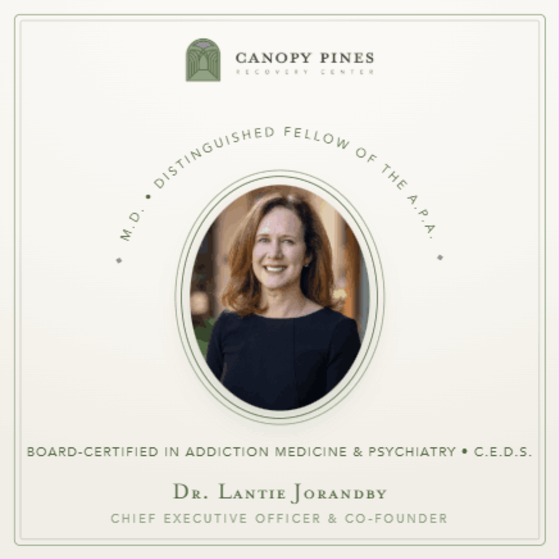
Founded and Led By Dr. Lantie Jorandby
Dr. Lantie Jorandby has dedicated her professional life to treating women with mental illness and addiction, and she is among the most credentialed addiction psychiatrists practicing in the United States today. She is triple board-certified in general psychiatry, addiction psychiatry, and addiction medicine.
What Is Bipolar Disorder?

Bipolar disorder — formerly called manic-depressive illness — is a serious psychiatric condition characterized by dramatic shifts in mood, energy, and the ability to function in daily life. These are not ordinary ups and downs. They are clinically significant episodes that can last days, weeks, or months and affect nearly every dimension of a person’s life: relationships, occupation, physical health, and financial stability.
There are several recognized subtypes.
Bipolar I
- Involves full manic episodes severe enough to require hospitalization or emergency care, often accompanied by major depressive episodes.
Bipolar II
- Features hypomanic episodes — elevated mood that is less extreme than full mania — alongside significant major depressive episodes.
Cyclothymia
- Involves chronic, milder mood fluctuations that cycle over at least two years without meeting full diagnostic criteria for mania or depression.
4.4% of U.S. adults will experience bipolar disorder at some point in their lives, with an estimated 82.9% experiencing serious functional impairment — the highest rate among all mood disorders. Source: https://www.nimh.nih.gov/health/statistics/bipolar-disorder
Is Bipolar Disorder More Common in Men or Women?
Overall, bipolar disorder affects men and women at nearly equal rates — approximately 2.8% of U.S. adults carry the diagnosis in any given year. However, how the condition presents, progresses, and responds to treatment is meaningfully different for women.
Women are significantly more likely to experience rapid cycling — four or more distinct mood episodes within a year — and tend to have higher rates of depressive and mixed episodes compared to men. Women are also more susceptible to bipolar symptoms during hormonal transitions: the menstrual cycle, pregnancy, the postpartum period, and perimenopause can all destabilize mood in ways that require clinicians experienced in women’s psychiatric care. These biological realities make women’s treatment a distinct discipline rather than an adaptation of standard care.
Causes of Bipolar Disorder in Women
Bipolar disorder results from a combination of genetic, neurobiological, and environmental factors. For women, hormonal biology adds an additional and significant layer of vulnerability that shapes both onset and course.
- Genetics: Research consistently shows a strong hereditary component. Approximately two-thirds of individuals diagnosed with bipolar disorder have at least one close relative with the illness or with major depressive disorder, suggesting that family history is among the most reliable risk indicators.
- Hormonal fluctuations: Estrogen and progesterone influence mood-regulating neurotransmitters, including serotonin and dopamine. Research has identified estrogen receptor gene variation as a risk factor that may make certain women more vulnerable to bipolar episodes during periods of hormonal fluctuation.
- Reproductive transitions: The postpartum period, perimenopause, and premenstrual phases each represent windows of elevated risk for mood destabilization in women already living with bipolar disorder.
- Trauma and chronic stress: Adverse childhood experiences and ongoing stress are consistently linked to earlier onset and a more severe longitudinal course in women with bipolar disorder.
- Co-occurring conditions: Women with bipolar disorder carry disproportionately high rates of anxiety disorders, PTSD, and eating disorders — all of which can obscure accurate diagnosis and delay access to effective treatment.
What Does Bipolar Disorder Look Like in Women?

Recognizing bipolar disorder in women is more complex than diagnostic criteria alone suggest. Women with bipolar disorder are more likely to first present with depressive symptoms — which frequently leads to an initial misdiagnosis of unipolar depression and years of inadequate treatment. When manic or hypomanic phases do emerge, they often look different in women: less classically grandiose, more irritable, and more frequently accompanied by anxiety.
Women with bipolar disorder are more commonly diagnosed with Bipolar II, experience more frequent depressive episodes, and are more likely to experience rapid cycling — all of which directly affect how the condition is identified and how it must be treated.
Behavioral Patterns Common in Women With Bipolar Disorder
During manic or hypomanic phases, a recognizable cluster of behaviors often emerges that differs sharply from baseline. Family members and friends frequently notice these changes before the woman herself does. Common behavioral patterns during elevated mood states include:
- Significantly reduced need for sleep without feeling fatigued or tired
- Racing thoughts and rapid, pressured speech that is difficult to interrupt
- Impulsive financial decisions, including excessive spending or reckless monetary behavior
- Inflated self-esteem or grandiose beliefs about personal abilities or importance
- Increased goal-directed activity and beginning multiple projects simultaneously
- Heightened irritability, agitation, or hostility disproportionate to circumstances
- Difficulty sustaining concentration on the commitments made during depressive phases
Sexual Behavior and Bipolar Disorder in Women
Hypersexuality — elevated sexual interest and impulsive sexual behavior — is a recognized clinical feature of manic episodes in bipolar disorder. For women, this symptom carries particular significance and is one of the most frequently unaddressed aspects of the condition.
During elevated mood states, women with bipolar disorder may engage in sexual behaviors that are substantially out of character: increased sexual preoccupation, provocative or seductive conduct, impulsive sexual decision-making, and a greater likelihood of encounters that carry risk for sexually transmitted infections or unintended pregnancy. Research examining women with Bipolar I disorder has documented marked increases in sexual display and interest during manic phases compared to women without bipolar disorder.
The aftermath of these episodes — during the depressive phase that follows — often brings profound shame and guilt that can become a significant barrier to seeking help. Understanding hypersexuality as a psychiatric symptom rather than a personal failing is critical for both the women experiencing it and the loved ones supporting them. A dual diagnosis treatment approach that addresses the mood disorder alongside the emotional consequences of manic-phase behavior provides the most effective path toward recovery.
During depressive episodes, the behavioral picture shifts dramatically. Women may withdraw from relationships and social contact, neglect self-care, experience significant changes in sleep and appetite, and struggle with pervasive feelings of worthlessness, hopelessness, and — in more severe cases — recurring thoughts of death or suicide. The contrast between manic and depressive states can be so extreme that family members struggle to reconcile both phases as expressions of the same underlying condition.
Benefits of Residential Treatment at Canopy Pines for Bipolar Disorder for Women

When bipolar disorder has destabilized daily functioning — when outpatient care is insufficient to maintain safety, when medications have not yet been optimized, or when the home environment is actively contributing to ongoing mood cycling — residential treatment programs for bipolar disorder provide a level of clinical intensity that no outpatient setting can replicate.
A women-specific residential environment offers distinct therapeutic advantages. Gender-responsive programming allows women to address the shame, relational trauma, and hormonal factors tied to their unique experience of bipolar disorder without the dynamics that mixed-gender settings introduce. At Canopy Pines, residential care for adults with bipolar disorder is structured around the clinical conviction that women heal most effectively when treatment is designed specifically for them — not adapted from a model built for someone else.
- Around-the-clock psychiatric monitoring — Medication adjustments can be made quickly and safely, with immediate clinical response if symptoms escalate during any point in treatment.
- Accurate diagnosis — Bipolar II is frequently misidentified as unipolar depression. A residential setting provides the clinical depth and observation time necessary for a comprehensive psychiatric evaluation that confirms or corrects diagnosis.
- Structured daily routine — Regular sleep, meals, and activity schedules are themselves therapeutic for bipolar disorder, reducing episode triggers tied to circadian disruption — one of the most consistent precursors to mood episodes.
- Multi-modal intensive therapy — Daily individual sessions, skills-based groups, and specialized programming create an immersive therapeutic environment far beyond what weekly outpatient appointments provide.
- Peer community — Women healing alongside others facing similar challenges significantly reduces the profound isolation that so frequently accompanies bipolar disorder.
- Family education and support — Residential care includes family programming that helps loved ones understand bipolar disorder, recognize early warning signs, and develop the communication skills to provide effective support after discharge.
- Comprehensive aftercare planning — Women leave residential treatment with an aftercare plan, medication management protocol, and referral structure in place — not a discharge date and a list of phone numbers.
.
Therapies at Canopy Pines to Help Women With Bipolar Disorder
Medication stabilizes the neurobiological foundation of bipolar disorder, but the evidence base is clear: the strongest long-term outcomes come from combining medication with structured, evidence-based psychotherapy. The following therapeutic approaches form the clinical core of women’s bipolar residential treatment at Canopy Pines.
Skill-Based
Dialectical Behavior Therapy (DBT)
DBT directly targets emotion dysregulation — the inability to modulate intense emotional states that is central to bipolar disorder. DBT builds skills in distress tolerance, emotion regulation, mindfulness, and interpersonal effectiveness through structured individual and group formats.
Cognitive Behavioral Therapy (CBT)
CBT challenges the distorted thought patterns that fuel depressive and manic episodes. Research consistently shows CBT reduces relapse rates and lessens the severity of mood episodes over time in people with bipolar disorder.
Family-Focused Therapy (FFT)
Bipolar disorder doesn’t happen in isolation. FFT educates and trains family members in communication strategies that lower relapse risk and builds the home environment into part of the recovery system rather than a stressor within it.
EMDR Therapy
Eye Movement Desensitization and Reprocessing addresses the trauma histories that co-occur with bipolar disorder at high rates in women — trauma that, left unprocessed, continues to destabilize mood and compromise recovery.
Experiential Therapy
Equine-assisted and other experiential modalities build emotional attunement, present-moment awareness, and self-regulation — capacities that extend the work of individual therapy into lived experience.
Managed Medications That Can Help Women With Bipolar Disorder
Pharmacological treatment is the clinical cornerstone of bipolar disorder management. The goal of medication is to stabilize mood, reduce the frequency and severity of episodes, and create the neurobiological foundation on which therapeutic work can take root. At Canopy Pines, medication management is led by psychiatrists who develop individualized regimens based on bipolar subtype, episode history, and each woman’s specific clinical profile.
The primary medication classes used in treating bipolar disorder include:
Mood stabilizers:
- Lithium remains one of the most extensively researched and effective medications for managing both manic and depressive episodes in bipolar disorder. Valproate (divalproex) is another widely used stabilizer, particularly effective for rapid cycling and mixed states — patterns that disproportionately affect women.
Anticonvulsants:
- Lamotrigine is particularly effective for the depressive phase of bipolar disorder and is frequently prescribed for women with Bipolar II. Carbamazepine serves as an alternative when other mood stabilizers have not achieved adequate symptom control.
Atypical antipsychotics:
- Quetiapine and lurasidone are FDA-approved for bipolar depression and are used alongside or in place of traditional mood stabilizers depending on symptom profiles. Olanzapine, aripiprazole, and risperidone are utilized for acute manic presentations.
For women of childbearing age or those considering pregnancy, medication selection requires additional clinical care. Some mood stabilizers carry teratogenic risks, and decisions about pharmacological management during pregnancy must be made in close collaboration with a psychiatrist experienced in women’s reproductive mental health. The biological realities of being a woman with bipolar disorder require treatment that is different by design — not merely in spirit.
Is Bipolar Disorder Curable? Can it Become Manageable Long-Term?

Bipolar disorder is not curable. It is a lifelong condition with a clear biological basis, and it does not resolve on its own without treatment. But the word lifelong does not mean hopeless — and it does not mean unmanageable. With the right combination of medication, psychotherapy, structure, and sustained support, the majority of women with bipolar disorder go on to lead stable, productive, and meaningful lives.
The long-term trajectory of bipolar disorder is directly shaped by treatment engagement. Research is consistent: ongoing care significantly reduces the frequency and severity of future episodes. Each untreated or inadequately treated episode, by contrast, is associated with increased relapse risk and a more difficult course over time. Early, comprehensive treatment is not just therapeutic — it is protective.
Sustainable long-term management of bipolar disorder for women typically involves:
- Consistent medication adherence with regular psychiatric follow-up to monitor and adjust regimens as life circumstances and hormonal contexts change
- Maintaining regular sleep, meal, and activity schedules to protect the circadian stability that bipolar disorder disrupts
- Ongoing individual therapy — particularly CBT and DBT — to build and reinforce relapse prevention skills over time
- Early recognition of prodromal symptoms: the subtle warning signs that precede a full mood episode, which can be identified and acted upon before escalation
- A support network of family members, friends, and peers who understand the condition and can provide grounding structure during vulnerable periods
- Reduced exposure to known triggers: disrupted sleep, alcohol and substance use, extreme interpersonal stress, and social isolation
Women who complete residential treatment with a well-titrated medication regimen, a therapeutic skills foundation, and a concrete aftercare plan are in a meaningfully better position than those managing the condition through outpatient care alone. Recovery is not the absence of bipolar disorder — it is the capacity to live well within it, with the tools and support to recognize symptoms and respond before they escalate into crisis.

Medically Reviewed By Dr. Lantie Jorandby
Triple Board-Certified in Psychiatry, Addiction Psychiatry, & Addiction Medicine