
Women's Group Therapy
How Shared Healing Transforms Addiction and Mental Health Recovery
There is something uniquely powerful that happens when a woman realizes she is not alone — that the shame, the pain, and the struggle she has been carrying in silence are things other women understand. That realization is at the heart of women’s group therapy, and it is one of the most clinically significant experiences a woman can have in addiction or mental health treatment.
At Canopy Pines Recovery, group therapy is a cornerstone of our women-only residential program in Tallahassee, Florida. This page explains what group therapy is, how it works for both addiction and mental health treatment, what the research says about its effectiveness for women, and why it remains one of the most valuable tools in aftercare and long-term recovery.
What Is Group Therapy?
Group therapy is a structured, clinician-led form of psychotherapy in which a small number of people — typically between five and fifteen — meet regularly to work on shared emotional, psychological, or behavioral challenges. A licensed therapist or counselor guides each session, facilitating discussion, skill-building, and interpersonal reflection in ways that would not be possible in one-on-one treatment alone.
The foundations of modern group therapy were shaped significantly by psychiatrist Irvin Yalom, whose research identified a set of core “therapeutic factors” — including universality, cohesion, altruism, and interpersonal learning — that explain why being in a group can accelerate healing. When a woman hears someone else voice exactly what she has been feeling but couldn’t name, something shifts. Yalom called it universality: the recognition that one’s suffering is not unique and does not have to be faced alone.
Women’s group therapy and women’s issues support groups narrow this focus further — creating a gender-specific space where women can speak openly about trauma, relationships, caregiving burdens, body image, motherhood, and the social forces that have shaped their mental health and substance use, without filtering themselves for a mixed-gender audience.
How Does Group Therapy Work for Addiction Treatment?
According to the Substance Abuse and Mental Health Services Administration (SAMHSA), group therapy produces outcomes comparable to individual therapy in the treatment of substance use disorders — including improvements in abstinence rates, treatment retention, and reductions in the frequency and severity of use. In certain instances, group approaches may be even more effective than individual treatment alone.
In addiction treatment, group therapy works through several interconnected mechanisms:
- Peer accountability: Knowing that other group members are aware of your commitment to sobriety creates a powerful, interpersonal incentive to maintain it that no individual therapy session can replicate.
- Reducing shame and isolation: Addiction thrives in secrecy and shame. Hearing others describe the same experiences — and witnessing their honesty met with empathy rather than judgment — dissolves the shame that keeps many women stuck.
- Learning from peers in recovery: Group members at different stages of recovery model what sustained sobriety looks like and share what has actually worked in their lives, offering practical, peer-tested knowledge that complements clinical guidance.
- Developing coping and communication skills: Group settings provide a safe space to practice new ways of communicating, setting boundaries, and handling conflict — skills that transfer directly to relationships outside of treatment.
- Building a recovery community: The bonds formed in group therapy are often among the most durable support relationships a woman carries into her life after treatment.
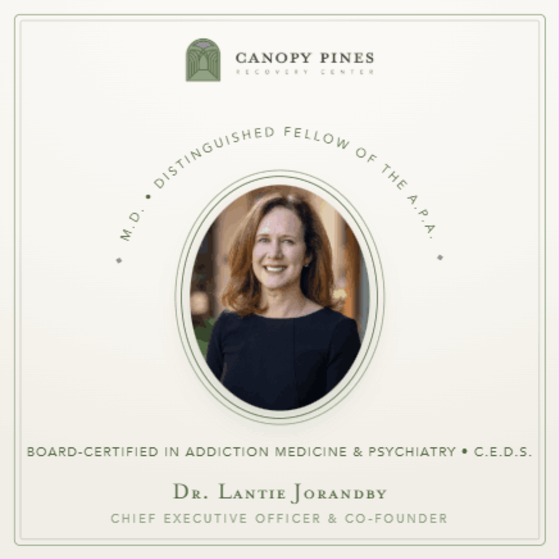
Founded and Led By Dr. Lantie Jorandby
Dr. Lantie Jorandby has dedicated her professional life to treating women with mental illness and addiction, and she is among the most credentialed addiction psychiatrists practicing in the United States today. She is triple board-certified in general psychiatry, addiction psychiatry, and addiction medicine.
How Does Women's Group Therapy Work for Mental Health Treatment?
Group therapy is equally well-established in the treatment of mental health conditions, including depression, anxiety, PTSD, borderline personality disorder, and bipolar disorder. Research supports its effectiveness as a complement to individual therapy and, for some presentations, as a primary treatment modality.
In mental health contexts, group therapy provides a structured environment to:
- Process difficult emotions and experiences with the support of both a trained therapist and peers who understand
- Challenge distorted thought patterns through feedback from multiple perspectives, not just one clinician’s
- Practice interpersonal skills in real time, working through group dynamics that mirror real-world relationships
- Build distress tolerance and emotion regulation skills — especially within modalities like dialectical behavior therapy (DBT) group work
- Normalize experiences of depression, anxiety, or trauma, reducing the stigma and self-blame that compound mental health suffering
For women with co-occurring disorders — where addiction and a mental health condition are present simultaneously — group therapy addresses both dimensions at once, reinforcing the integrated approach that produces the best clinical outcomes.
Types Of Group Therapy At Canopy Pines Recover in Florida
ot all groups are structured the same way. Effective group therapy and support programs draw on several evidence-based formats, often combining multiple types across a treatment stay:
Psychoeducational Groups
Teach women about the science of addiction, how mental health conditions work, medication, and recovery principles. Knowledge reduces fear and helps women make sense of what has been happening in their bodies and minds.
Process-Oriented Groups
Focus on members’ personal issues, emotions, and interpersonal dynamics in real time. Women share what is present for them and hear honest reflections from peers and the therapist — often the most emotionally impactful group format.
CBT Groups
Apply cognitive behavioral therapy principles in a group setting, helping women identify the thought patterns and behavioral cycles that fuel substance use or mental health symptoms, and practice replacing them.
DBT Skills Groups
Teach the four core dialectical behavior therapy skill sets — mindfulness, distress tolerance, emotion regulation, and interpersonal effectiveness — in a structured, skill-practice format particularly effective for women with intense emotional experiences.
Trauma-Focused Groups
Provide a safe, gender-specific container to explore and process trauma history — especially important given that a majority of women in addiction treatment have experienced physical, sexual, or relational trauma.
Relapse Prevention Groups
Help women identify their personal triggers, early warning signs, and evidence-based strategies to protect their recovery — building a personalized toolkit before they transition out of residential care.

Evidence of the Positive Effects of Group Therapy for Women
The research base supporting group therapy for women in addiction and mental health treatment is substantial and growing — particularly around the specific advantages of gender-specific, women-only groups over mixed-gender formats.

Medically Reviewed By Dr. Lantie Jorandby
Triple Board-Certified in Psychiatry, Addiction Psychiatry, & Addiction Medicine
Last Reviewed: June 2026