
Alcohol Treatment for Women
Residential Treatment That’s Evidence-Based

Women struggling with alcohol addiction face unique challenges that traditional treatment programs may not adequately address. From hormonal factors to societal stigma, women’s alcohol treatment requires specialized approaches that account for these distinct needs. At Canopy Pines Recovery, we understand that effective alcohol addiction treatment for women goes beyond generic recovery models—it demands expertise, compassion, and evidence-based practices designed specifically for women’s health and recovery.
This comprehensive guide explores what alcoholism looks like in women, why residential treatment works, and the therapeutic approaches that are most effective for long-term recovery.
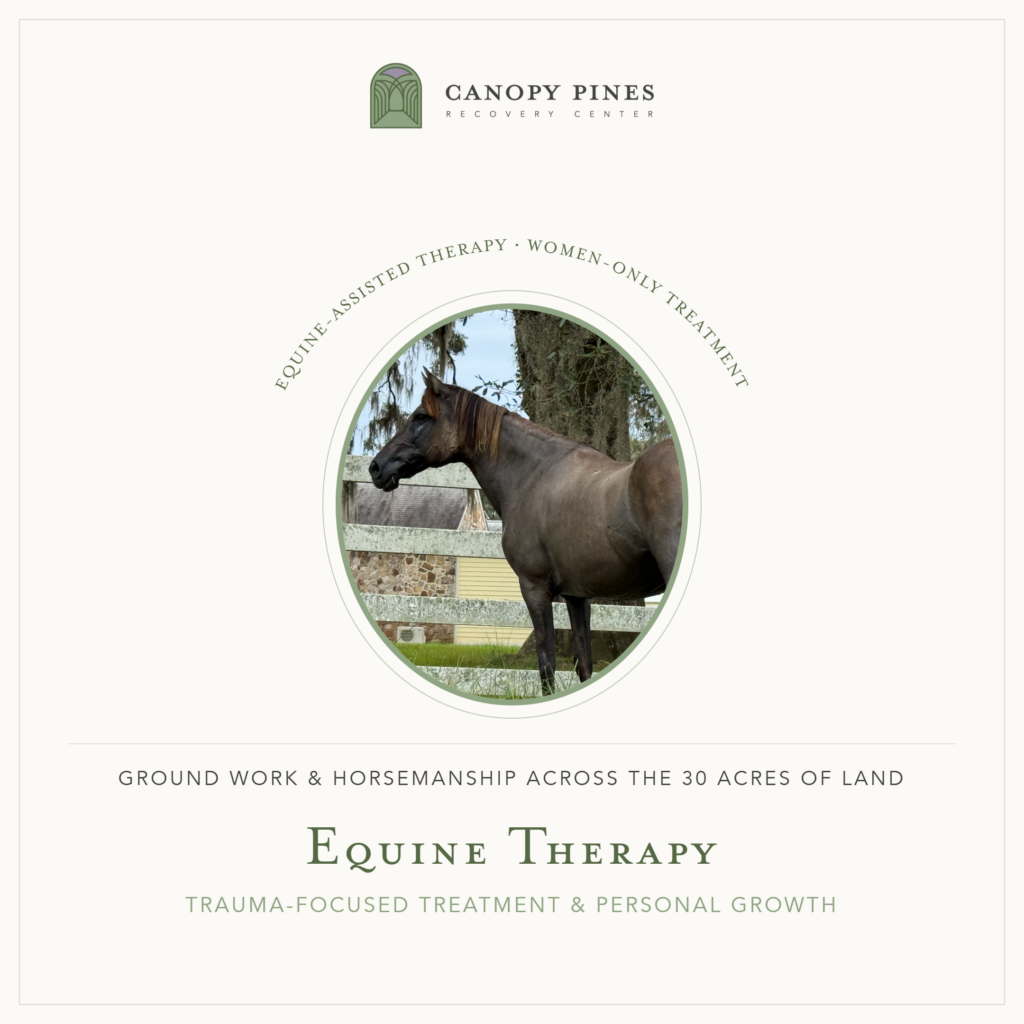
Equine Assisted Therapy Offered
Equine therapy is part of the continuum of evidence-based treatment at Canopy Pines Recovery. It has been shown to offer several benefits for mental health and addiction treatment, including personal growth, self-awareness, and emotional stability. Learn more about the program.
What is Alcohol Use Disorder for Women?
Alcoholism, clinically known as Alcohol Use Disorder (AUD), is a chronic medical condition characterized by an inability to control or stop alcohol consumption despite negative consequences. The National Institute on Alcohol Abuse and Alcoholism defines AUD as a pattern of alcohol use that leads to clinically significant impairment or distress.
Women experience alcoholism differently than men due to biological, psychological, and social factors. Understanding these differences is essential for recognizing the problem and seeking appropriate help.
Signs of alcoholism in women
According to the Diagnostic and Statistical Manual of Mental Disorders (DSM-5), women are diagnosed with Alcohol Use Disorder when they exhibit at least two of the following criteria within a 12-month period:
- Drinking more or for longer than intended
- Persistent desire or unsuccessful efforts to cut down or control alcohol use
- Spending excessive time obtaining, using, or recovering from alcohol
- Craving or a strong desire to use alcohol
- Continued use despite recurrent social or interpersonal problems caused or worsened by alcohol
- Giving up or reducing important activities due to alcohol use
- Recurrent alcohol use in situations where it's physically hazardous
- Continued use despite persistent or recurrent physical or psychological problems
- Tolerance (needing more alcohol to achieve the same effect)
- Withdrawal symptoms when not drinking
Women may progress more quickly from initial use to alcohol dependence—a phenomenon called “telescoping“—making early identification and intervention critical.
The Side Effects of Alcoholism for Women
Alcohol affects women’s bodies differently than men’s, leading to unique and often more severe health consequences. Women have less of the enzyme alcohol dehydrogenase, which breaks down alcohol, meaning alcohol remains in their systems longer and causes greater damage.
Physical Health Effects
- Liver Disease: Women develop alcohol-related liver disease at lower consumption levels and with shorter drinking durations than men
- Heart Disease: Excessive drinking increases risk of cardiomyopathy and high blood pressure
- Cancer Risk: Women who drink heavily have increased risk of breast, mouth, and esophageal cancers
- Bone Health: Alcohol interferes with calcium absorption, increasing osteoporosis risk
- Reproductive Issues: Includes irregular menstruation, infertility, and complications in pregnancy
- Immune System Suppression: Increases vulnerability to infections and illness
Mental Health Effects
- Depression and anxiety disorders
- Sleep disturbances and insomnia
- Increased suicide risk (women with AUD have 4-5 times higher suicide rate)
- Cognitive impairment and memory problems
- Mood disorders and emotional instability
Alcohol affects women’s bodies differently than men’s, leading to unique and often more severe health consequences. Women have less of the enzyme alcohol dehydrogenase, which breaks down alcohol, meaning alcohol remains in their systems longer and causes greater damage.

Does Alcohol Affect Women and Men Differently?
Research consistently shows that women experience more severe health consequences from alcohol at lower consumption levels. This isn’t a matter of tolerance—it’s biology. Several factors contribute:
- Body Composition: Women typically have higher body fat percentages and less water weight, causing alcohol to be more concentrated in the bloodstream
- Metabolism: Women’s bodies metabolize alcohol less efficiently than men’s, even when accounting for weight differences
- Hormonal Factors: Estrogen increases alcohol absorption in the gastrointestinal tract; menstrual cycle phases affect how quickly alcohol is metabolized
- Organ Vulnerability: Women’s brains and organs are more susceptible to alcohol’s damaging effects
The National Institute on Alcohol Abuse and Alcoholism confirms that women develop alcohol-related health problems sooner than men, even with similar drinking patterns. This makes alcohol treatment programs for women particularly important for preventing permanent damage.
Residential Treatment Program at Canopy Pines
Benefits of residential treatment for women
Residential, or inpatient, treatment removes women from environments that often reinforce drinking patterns — stress at home, easy access to alcohol, unsupportive relationships — and replaces them with structured clinical and therapeutic support around the clock. At Canopy Pines, you can expect;
- Medical detox and stabilization — supervised withdrawal management reduces health risks during the earliest, most physically demanding phase of recovery. A safer way than trying to detox at home.
- 24/7 clinical support — continuous access to nursing and psychiatric staff for both physical and mental health needs
- Distance from triggers — time away from stressors, enabling and unsafe relationships supports early recovery
- Peer community — connecting with other women in similar circumstances reduces isolation and shame
- Time for deep therapeutic work — extended length of stay allows underlying trauma and co-occurring conditions to be addressed, not just the drinking itself
Helpful Therapies for Women with AUD At Canopy Pines
Effective alcohol treatment centers for women combine multiple evidence-based modalities tailored to how women experience addiction and recovery.
- Cognitive Behavioral Therapy (CBT) — helps identify and reframe the thought patterns that drive drinking behavior
- Dialectical Behavior Therapy (DBT) — builds emotional regulation and distress tolerance skills, particularly effective for women with co-occurring mood or trauma symptoms
- Trauma-informed therapy — addresses the high prevalence of trauma history among women with AUD in a way that avoids re-traumatization
- Group therapy — peer-based support in a women-only setting reduces stigma and builds accountability
- Family therapy — repairs relationships and builds a stronger support system for life after treatment
Retention and Completion Rates for Women's Residential Treatment

How many women actually complete alcohol treatment and maintain long-term sobriety? The statistics are sobering but improving with gender-specific interventions.
Statistics
- Women comprise approximately 35-40% of alcohol treatment participants in the United States
- Women have slightly higher treatment completion rates than men (around 40-50% vs. 35-45%)
- Residential treatment programs show higher retention rates than outpatient programs across genders
- Long-term recovery (12+ months sustained sobriety) is achieved by approximately 33-50% of women who complete residential treatment
The key factor in these outcomes is specialized women-focused treatment. When programs address women’s unique needs—including trauma history, family responsibilities, hormonal factors, and co-occurring mental health conditions—retention and recovery rates can significantly improve.

Medically Reviewed By Dr. Lantie Jorandby
Triple Board-Certified in Psychiatry, Addiction Psychiatry, & Addiction Medicine