
PTSD Treatment for Women
Residential Treatment Center In Florida That’s Evidence-Based
What is PTSD?
Post-traumatic stress disorder is one of the most misunderstood and undertreated conditions affecting women today. Women are nearly twice as likely as men to develop PTSD after a traumatic event, yet they are also less likely to receive the specialized, gender-sensitive care that leads to lasting recovery. At Canopy Pines Recovery, our residential PTSD treatment program is built entirely around the biological, psychological, and social realities of women’s trauma — led by a psychiatrist who has devoted her career to this population.
Post-traumatic stress disorder (PTSD) is a psychiatric condition that can develop after a person experiences or witnesses a life-threatening or deeply disturbing event. According to the National Institute of Mental Health (NIMH), PTSD causes the brain’s fear response to remain activated long after the danger has passed, leading to persistent, involuntary re-experiencing of trauma, heightened anxiety, and significant impairment in daily functioning.
Unlike a normal stress response that fades with time, PTSD is neurologically rooted: traumatic experiences can alter the structure and chemistry of the brain — particularly areas governing memory, fear, and emotional regulation — in ways that require targeted clinical intervention to address. This is why well-meaning support from family alone is rarely enough; PTSD inpatient treatment in a structured clinical environment is often the most effective path to recovery.

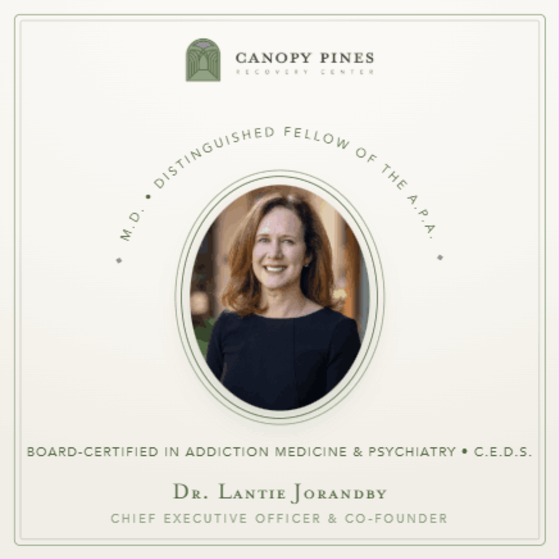
Founded and Led By Dr. Lantie Jorandby
Dr. Lantie Jorandby has dedicated her professional life to treating women with mental illness and addiction, and she is among the most credentialed addiction psychiatrists practicing in the United States today. She is triple board-certified in general psychiatry, addiction psychiatry, and addiction medicine.
What Is PTSD?
Post-traumatic stress disorder (PTSD) is a psychiatric condition that can develop after a person experiences or witnesses a life-threatening or deeply disturbing event. According to the National Institute of Mental Health (NIMH), PTSD causes the brain’s fear response to remain activated long after the danger has passed, leading to persistent, involuntary re-experiencing of trauma, heightened anxiety, and significant impairment in daily functioning.
Unlike a normal stress response that fades with time, PTSD is neurologically rooted: traumatic experiences can alter the structure and chemistry of the brain — particularly areas governing memory, fear, and emotional regulation — in ways that require targeted clinical intervention to address. This is why well-meaning support from family alone is rarely enough; PTSD inpatient treatment in a structured clinical environment is often the most effective path to recovery.
How Common Is PTSD?
Common Causes of PTSD in Women
While any person can develop PTSD following a traumatic event, the types of trauma most likely to trigger the condition differ markedly between men and women. Women are significantly more likely to experience:
- Sexual assault and rape — the leading cause of PTSD in women, with research showing 94% of rape survivors experience PTSD symptoms in the two weeks following the assault
- Intimate partner violence (IPV) — physical, emotional, and sexual abuse within relationships
- Childhood sexual or physical abuse — adverse childhood experiences (ACEs) significantly elevate lifetime PTSD risk
- Sudden loss or grief — unexpected death of a child, partner, or close family member
- Medical trauma — difficult childbirth, serious illness, or invasive medical procedures
- Community violence or natural disasters — including Florida’s recurring hurricane events
- Human trafficking — survivors carry some of the highest PTSD rates of any population studied

Signs and Symptoms of PTSD in Women
The American Psychiatric Association organizes PTSD symptoms into four clusters, all of which must be present for at least one month following trauma exposure for a clinical diagnosis. Women often experience each cluster differently from men — with higher rates of emotional numbing, avoidance, and depression — which is why gender-informed assessment and a PTSD treatment program designed specifically for women matters.
Re-Experiencing
- Intrusive flashbacks of the trauma
- Recurring nightmares
- Intense emotional or physical distress when reminded of the event
- Involuntary, vivid traumatic memories

Avoidance
- Avoiding thoughts, feelings, or memories of trauma
- Staying away from people, places, or activities that trigger memories
- Emotional detachment or feeling “cut off” from life
- Loss of interest in once-enjoyable activities

Negative Cognitions & Mood
- Persistent negative beliefs about oneself or the world
- Distorted feelings of blame or guilt
- Persistent depression or anxiety
- Feeling estranged from others
Hyperarousal
- Being easily startled or “on edge”
- Difficulty sleeping or staying asleep
- Irritability or angry outbursts
- Problems with concentration
- Reckless or self-destructive behavior

Women's Residential Treatment for PTSD
Outpatient therapy can be helpful for mild-to-moderate PTSD when a person has a stable living environment, strong social support, and no co-occurring disorders. However, inpatient PTSD treatment — sometimes called residential PTSD treatment — is typically indicated when one or more of the following criteria are met:
- PTSD symptoms are severe enough to prevent basic daily functioning (work, relationships, self-care)
- There is a co-occurring substance use disorder — alcohol or drugs are being used to manage PTSD symptoms
- The person is experiencing active suicidal ideation or self-harm behaviors
- Multiple courses of outpatient therapy have not produced meaningful improvement
- The home environment is unsafe, actively traumatizing, or incompatible with recovery
- Co-occurring depression, anxiety, or eating disorders require simultaneous clinical management
- The person is unable to consistently attend outpatient appointments due to symptoms
If you recognize these signs in someone you love, speaking with our admissions team is the right first step. Our clinicians can help determine the appropriate level of care.
Is PTSD More Common in Men or Women?
PTSD is significantly more common in women. According to the U.S. Department of Veterans Affairs National Center for PTSD, about 10% of women will experience PTSD at some point in their lives, compared to approximately 4% of men. This disparity holds across cultures, age groups, and trauma types — and it is not simply because women report trauma more readily.

Why Are Women More Likely to Develop PTSD?
The higher prevalence of PTSD in women is rooted in both the types of trauma they are more likely to encounter and biological differences in how the brain processes traumatic stress. Key factors include:
- Trauma type matters: Interpersonal traumas — particularly sexual assault and childhood abuse — carry the highest risk of leading to PTSD, and women are far more likely to experience these types of trauma
- Neurobiological differences: Research published in the journal Biological Psychiatry shows that women have heightened amygdala reactivity to fear stimuli and lower baseline cortisol levels following trauma, making the brain’s fear-extinction process less efficient
- Hormonal influences: Estrogen affects stress-response pathways; fluctuations during the menstrual cycle, postpartum period, and perimenopause can intensify PTSD symptoms
- Socialization and shame: Women are often conditioned to minimize or self-blame for traumatic experiences, delaying help-seeking and allowing PTSD to deepen before treatment is pursued
- Revictimization: Women with prior trauma are statistically more vulnerable to future trauma, compounding PTSD risk over time
How to Love a Woman with PTSD
Supporting a woman with PTSD is one of the most important — and most exhausting — roles a family member or partner can take on. It is normal to feel helpless, frightened, or even hurt by behaviors that are really symptoms of a treatable medical condition. Here is what the research and our clinical team suggest:
- Educate yourself. PTSD is not a choice or a character flaw. Understanding the neuroscience of trauma helps replace frustration with compassion.
- Don’t push for details. Asking a trauma survivor to relive her experience before she is ready can re-traumatize her. Let her lead.
- Be consistent and predictable. Unpredictability can feel threatening to someone with PTSD. Routines, clear communication, and follow-through matter enormously.
- Recognize triggers without judgment. A response that seems disproportionate to you may be entirely proportional to what her nervous system is re-experiencing.
- Encourage — don’t pressure — professional treatment. Express your concern once, clearly, then offer to help with logistics. Ultimatums tend to backfire.
- Take care of yourself. Secondary traumatic stress is real. Seek your own support, whether through therapy, support groups, or our family therapy program.
- Know when to act. If she expresses thoughts of self-harm, contact a crisis line or emergency services immediately. Safety comes before everything else.

Medically Reviewed By Dr. Lantie Jorandby
Triple Board-Certified in Psychiatry, Addiction Psychiatry, & Addiction Medicine
Last Reviewed: June 2026