
OCD Treatment for Women
Residential Treatment Center In Florida That’s Evidence-Based

Obsessive-compulsive disorder (OCD) is far more than being tidy or checking the stove twice before bed. For millions of women across the United States, OCD is a chronic, debilitating mental health condition that can consume hours of every day — straining relationships, derailing careers, and quietly dismantling quality of life. When outpatient therapy and medication are no longer enough, residential OCD treatment offers the structured, immersive support needed to achieve lasting recovery.
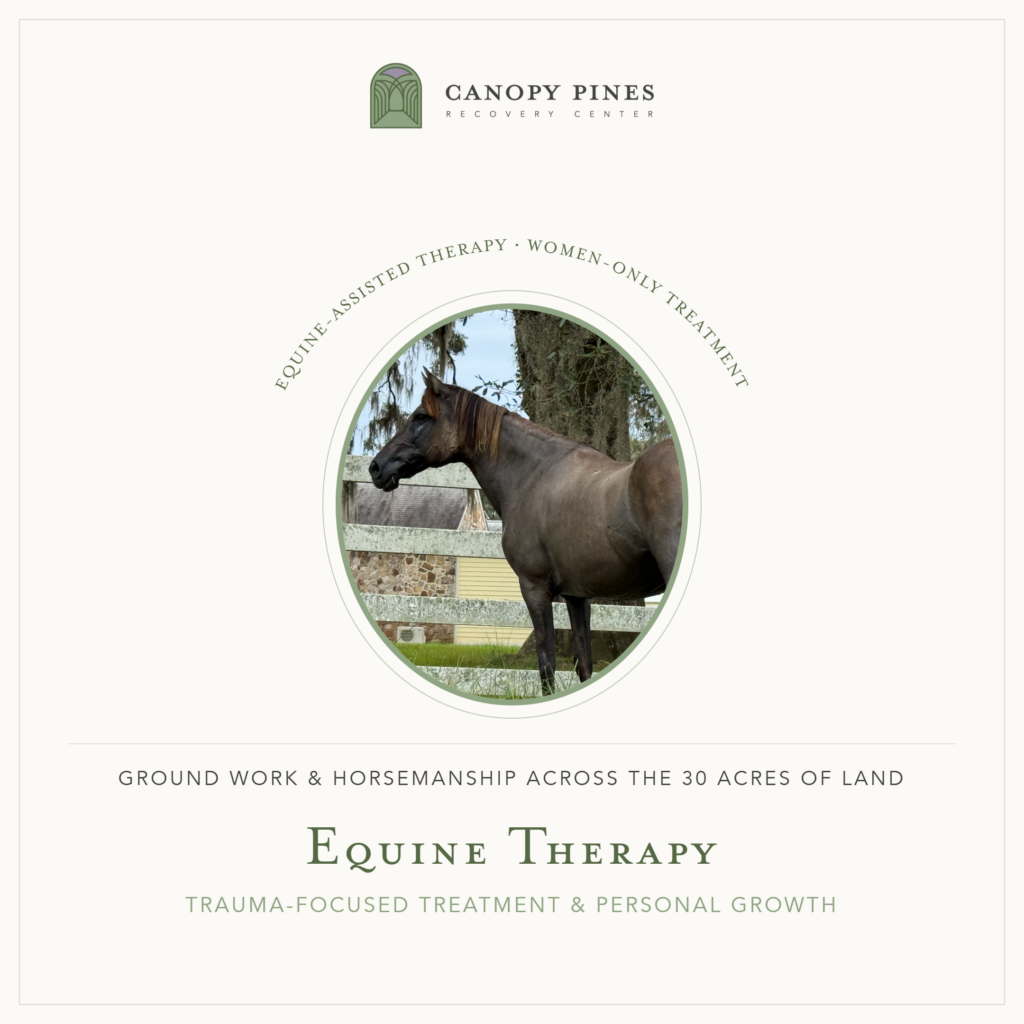
Equine Assisted Therapy Offered
Equine therapy is part of the continuum of evidence-based treatment at Canopy Pines Recovery. It has been shown to offer several benefits for mental health and addiction treatment, including personal growth, self-awareness, and emotional stability. Learn more about the program.
What Is Obsessive-Compulsive Disorder (OCD)?
OCD is a recognized anxiety-related disorder characterized by unwanted recurring thoughts (obsessions), and repetitive behaviors or mental acts (compulsions) performed in an attempt to reduce anxiety. According to the National Institute of Mental Health (NIMH), OCD affects approximately 1.2% of U.S. adults in a given year — roughly 2.2 to 3 million people — with similar prevalence across sexes, though the presentation and triggers often differ significantly by gender.
The disorder exists on a spectrum. Mild OCD may cause noticeable but manageable distress; severe OCD can make ordinary daily tasks nearly impossible. People with OCD typically recognize their obsessions as irrational but feel powerless to stop the cycle of intrusive thoughts and compulsive responses.
Causes of OCD: Genetic and Environmental Factors
Research points to a combination of genetic and environmental contributors:
- Genetic factors: OCD tends to run in families. Twin studies suggest heritability rates between 40–65% in children and approximately 27–47% in adults, indicating a meaningful genetic component.
- Neurobiological differences: Brain imaging research has identified differences in the orbitofrontal cortex and striatum — regions involved in decision-making and habit formation — in people with OCD, suggesting altered serotonin and glutamate signaling.
- Environmental triggers: Significant life stressors, trauma, abuse, or major life transitions (such as childbirth, puberty, or loss) can trigger or worsen OCD symptoms, particularly in genetically predisposed individuals.
- Immune and infectious factors: PANDAS (Pediatric Autoimmune Neuropsychiatric Disorders Associated with Streptococcal Infections) is a recognized condition in which streptococcal infections appear to trigger sudden OCD onset in children.
- Learned behaviors: Certain thought patterns reinforced over time — such as the belief that engaging in a compulsion will prevent harm — can entrench OCD cycles, particularly in individuals with high anxiety sensitivity.


How Common Is OCD in Women?
OCD affects women and men at roughly equal rates across a lifetime; however, research published in the Journal of Anxiety Disorders shows that women are significantly more likely to experience OCD onset in adulthood — particularly during hormonal transition periods such as the postpartum period and perimenopause. Women are also more likely than men to present with contamination obsessions and checking compulsions, and they report higher rates of shame and concealment, often delaying diagnosis by years.
Signs and Symptoms of OCD in Women
OCD manifests through two core symptom categories — obsessions and compulsions — but the specific themes and expressions vary considerably across individuals. Recognizing the signs of OCD in women is the critical first step toward finding effective care.
Common Obsessions in Women with OCD
- Contamination fears: Persistent fear of germs, illness, bodily fluids, or environmental toxins — often leading to avoidance of public spaces, hospitals, or shared objects.
- Harm obsessions: Intrusive thoughts about accidentally or intentionally harming oneself, a child, or a partner. These thoughts are deeply distressing and not reflective of desire or intent.
- Postpartum OCD: Unwanted, disturbing thoughts about the safety of a newborn are common in new mothers and frequently go unrecognized or are misdiagnosed as postpartum depression.
- Religious or moral scrupulosity: Excessive preoccupation with sin, blasphemy, or moral wrongdoing, often leading to compulsive prayer, confession, or religious ritual.
- Relationship OCD (ROCD): Persistent doubts about the rightness of a romantic relationship, a partner’s fidelity, or one’s own love — distinct from genuine relationship problems.
- Symmetry and “just right” OCD: A strong drive to arrange, order, or repeat actions until they feel correct, often consuming significant time each day.
- Health anxiety obsessions: Intrusive fears of having or developing a serious illness, often overlapping with somatic symptom disorder.
Common Compulsions in Women with OCD
- Excessive hand washing, showering, or cleaning rituals
- Repeatedly checking locks, appliances, or the safety of loved ones
- Seeking reassurance from family members or healthcare providers
- Mental reviewing or replaying events to neutralize anxiety
- Counting, tapping, or ordering objects in specific patterns
- Avoiding people, places, or situations that trigger obsessions
- Confessing or over-apologizing to relieve guilt-based obsessions
How Are OCD Symptoms Different in Women Compared to Men?

Yes — research consistently shows meaningful differences in OCD presentation by sex. Studies indicate that women are more likely to present with contamination and symmetry obsessions, while men more commonly present with sexual and aggressive obsessions, as well as earlier age of onset (typically in childhood or early adolescence). Women also tend to have higher rates of comorbid depression and eating disorders alongside OCD, complicating diagnosis and treatment if gender-specific approaches are not used.
Women also face unique cultural pressures — around cleanliness, caregiving, and “perfect” motherhood — that can amplify OCD-related shame and delay help-seeking. Gender-responsive residential treatment addresses these intersecting influences directly.
Do OCD Symptoms Change in Adolescents vs. Adults?
Adolescent OCD and adult-onset OCD share the same core features, but differences in expression and context are important to understand. OCD affects approximately 1 in 200 children and adolescents in the United States.
Key differences in adolescent OCD include:
- Family accommodation: Adolescents are more likely to involve family members in compulsions — asking parents to reassure them, clean, or rearrange objects. Family therapy is a critical treatment component.
- Academic and social impact: OCD in teens often surfaces as difficulty completing schoolwork (due to perfectionism or repeated checking), avoidance of school, and withdrawal from peers.
- Symptom concealment: Adolescent girls in particular are highly prone to hiding symptoms out of embarrassment, causing significant delays in diagnosis.
- Hormonal influence: Puberty-related hormonal shifts can precipitate or intensify OCD in young women, and symptoms frequently worsen around the menstrual cycle.
- Comorbidity: Teens with OCD frequently co-present with ADHD, depression, anxiety disorders, and eating disorders — all of which require integrated treatment.
Is OCD More Common in Men or Women?
Across a lifetime, OCD occurs at nearly equal rates in men and women; however, the timing of onset differs significantly. NIMH data show that men are more likely to develop OCD in childhood, while women most often experience first onset in adulthood — particularly during pregnancy, the postpartum period, or perimenopause, when estrogen fluctuations appear to influence serotonin signaling linked to OCD.
Women are also more likely to seek treatment for OCD, yet remain underdiagnosed because their symptoms (such as relationship obsessions or harm intrusions about a child) are frequently misattributed to anxiety, depression, or postpartum mood disorders. SAMHSA emphasizes that accurate diagnosis is a prerequisite for effective treatment, underscoring the importance of OCD-specialized residential care programs that understand the female experience of this disorder.

Benefits of Residential Treatment for OCD

For many women, outpatient therapy — even weekly sessions with an experienced OCD therapist — is not enough to break the deeply entrenched cycle of obsessions and compulsions. Residential OCD treatment provides a higher level of structured, immersive care that removes women from triggering home environments and offers daily, intensive evidence-based therapy.
The evidence-based treatments delivered in residential OCD programs include:
- Exposure and Response Prevention (ERP): The gold-standard behavioral therapy for OCD, in which clients are gradually, systematically exposed to obsession-triggering stimuli while learning to resist compulsive responses. Meta-analyses confirm ERP reduces OCD symptom severity by 50–60% in most patients.
- Cognitive-Behavioral Therapy (CBT): Helps clients identify and restructure distorted beliefs that fuel the OCD cycle, such as inflated responsibility, thought-action fusion, and intolerance of uncertainty.
- Acceptance and Commitment Therapy (ACT): Teaches psychological flexibility — accepting intrusive thoughts without engaging in compulsive responses — and aligning behavior with personal values rather than fear.
- Medication management: SSRIs (selective serotonin reuptake inhibitors) are first-line pharmacological treatments for OCD. Residential settings allow for closely monitored medication adjustment and optimization.
- Trauma-informed care: Many women with OCD have co-occurring trauma histories. Residential programs that integrate trauma treatment alongside OCD therapy produce superior outcomes.
- Group therapy and peer support: Connecting with other women who share similar experiences reduces isolation and shame — two of the most significant barriers to OCD recovery.
- Holistic wellness: Nutrition counseling, yoga, mindfulness, and somatic therapies complement clinical treatment by regulating the nervous system and building distress tolerance skills.
Benefits of an Aftercare Program for OCD
Completing a residential OCD treatment program is a transformative achievement — but it is also a beginning, not an endpoint. OCD is a chronic condition for many people, and maintaining progress requires a thoughtful, individualized aftercare plan that bridges the gap between residential care and independent living.
A structured aftercare program following residential OCD treatment center discharge typically includes:
- Partial Hospitalization Program (PHP) or Intensive Outpatient Program (IOP): Step-down levels of care that provide 15–30 hours of weekly programming while the individual transitions back to daily life — maintaining clinical intensity while rebuilding routine.
- Ongoing individual therapy with an OCD specialist: Weekly or biweekly ERP and CBT sessions with a therapist who specializes in OCD ensures continued skill-building and relapse prevention.
- Medication management follow-up: Regular psychiatric appointments to monitor SSRI efficacy, manage side effects, and adjust dosage as needed during the transition period.
- Peer and community support groups: Organizations such as the International OCD Foundation (IOCDF) maintain directories of in-person and virtual OCD support groups, providing peer connection that is highly protective against relapse.
- Family education and therapy: Because family accommodation is a primary driver of OCD maintenance, structured family therapy and psychoeducation help loved ones learn how to support recovery without reinforcing compulsions.
- Relapse prevention planning: A personalized written plan that identifies individual warning signs, coping strategies, and a clear action plan if OCD symptoms re-escalate — developed collaboratively with the treatment team before residential discharge.
- Wellness recommendations: Regular exercise, sleep hygiene, mindfulness practice, and healthy nutrition have demonstrated measurable benefit as adjuncts to OCD treatment, reducing anxiety baseline and supporting neurobiological recovery.
At Canopy Pines, we develop individualized aftercare plans for every woman before she leaves our residential program. Our clinical team coordinates directly with outpatient providers, family members, and community resources to ensure a seamless, supported transition.

Signs That a Woman Should Seek Residential OCD Treatment
Women with more extreme symptoms of OCD and co-occurring disorders would benefit most from residential treatment from the experienced professionals at Canopy Pines. Below are examples of symptoms;
- OCD rituals and compulsions consume 3 or more hours per day
- Symptoms have significantly worsened despite outpatient therapy and/or medication
- Functional impairment is severe — inability to work, parent, or maintain relationships
- Co-occurring depression or anxiety has reached crisis level
- Active suicidal ideation or self-harm behaviors are present
- OCD is co-occurring with substance use as a coping mechanism
- The home environment reinforces compulsions (family members accommodate rituals)
- The individual has tried multiple outpatient levels of care without adequate relief
- Postpartum OCD or pregnancy-related symptoms are escalating rapidly

Medically Reviewed By Dr. Lantie Jorandby
Triple Board-Certified in Psychiatry, Addiction Psychiatry, & Addiction Medicine
Last Reviewed: June 2026