
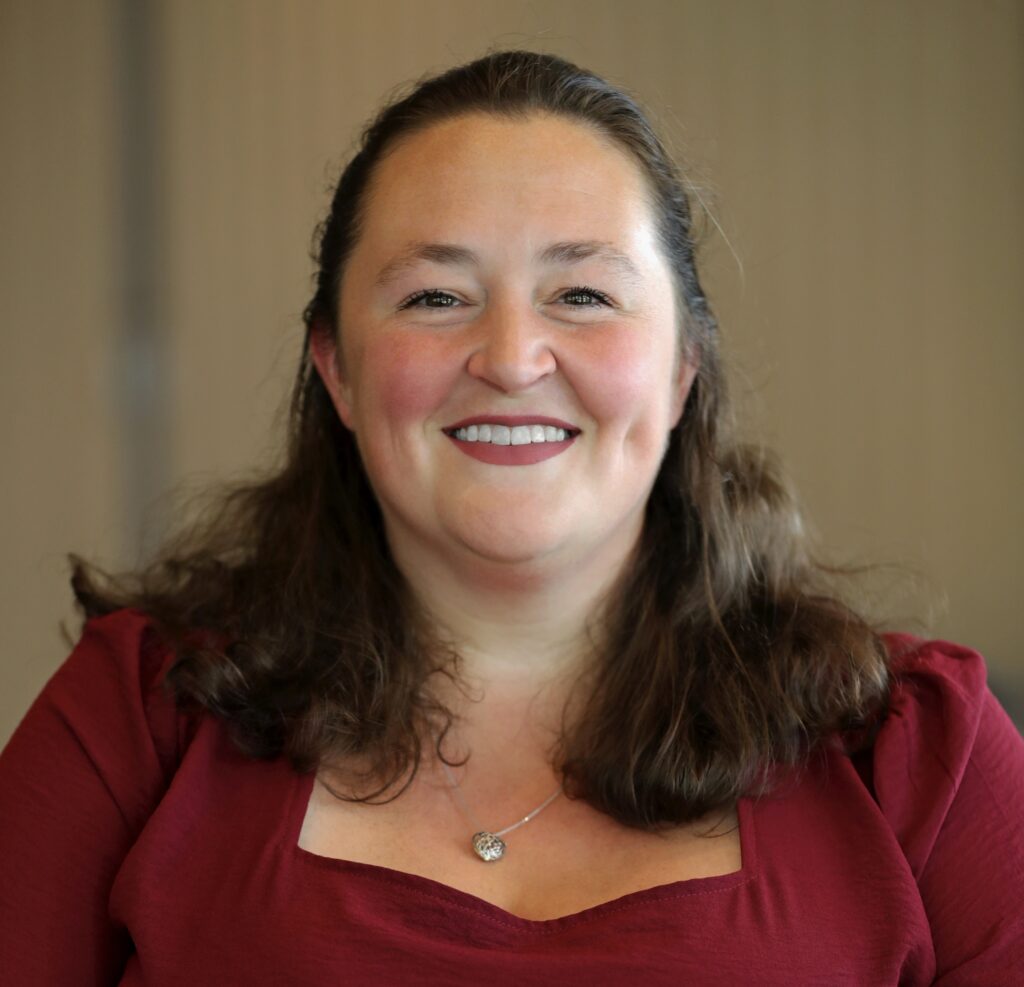
Ashley Cooper
Trauma Therapist
M.S., MFT, RMHCI
Ashley Cooper, M.S. MFT, RMHCI, is a trauma-informed therapist, clinical leader, and doctoral-level clinician specializing in the treatment of trauma, relational distress, family systems, and women’s mental health. She serves as Lead Therapist at Canopy Pines, where she provides evidence-based, experiential, and deeply relational care for women navigating trauma, emotional dysregulation, attachment wounds, anxiety, depression, and major life transitions.
Ashley earned her Master of Science in Marriage and Family Therapy from The University of Alabama and acquired comprehensive doctorate level training the Marriage and Family Therapy program at Florida State University. Her doctoral research focused on attachment, emotional synchrony, coping, and relationship functioning, reflecting her longstanding commitment to understanding the ways relationships shape emotional health, resilience, and healing.
Since beginning her clinical work in 2013, Ashley has accumulated extensive experience providing individual, couples, family, and group therapy across residential treatment, community mental health, private practice, university systems, and advocacy settings. She has worked extensively with adolescents, adults, couples, and families, with particular expertise in complex trauma, sexual trauma, domestic violence, attachment trauma, family conflict, crisis stabilization, and systems-based treatment.
Ashley previously served as Clinical Coordinator and Lead Clinician for a residential adolescent treatment program, where she helped develop and lead a systems-focused residential program for adolescents experiencing significant mental health crises. In this leadership role, she supervised clinicians and support staff, oversaw treatment planning and clinical quality, developed programming rooted in evidence-based practices, and trained staff in trauma-informed care, teamwork, conflict resolution, and family systems interventions.
Her professional background also includes 15 years of advocacy work supporting survivors of interpersonal violence. Ashley has served as a victim advocate within university and community systems, providing crisis intervention, forensic accompaniment, court advocacy, safety planning, and survivor support. She has extensive experience helping individuals navigate medical, legal, and institutional systems following trauma and has dedicated much of her career to supporting survivors in reclaiming safety, agency, and connection.
Ashley’s therapeutic approach is integrative, experiential, and grounded in relational neuroscience and systems theory. She draws from a range of evidence-based modalities, including Emotion Focused Therapy (EFT), Bowen Family Systems Theory, Structural Family Therapy, Strategic Family Therapy, Cognitive Behavioral Therapy (CBT), Dialectical Behavior Therapy (DBT), Internal Family Systems (IFS), Narrative Therapy, Solution Focused Therapy, Motivational Interviewing, and trauma-informed care approaches. She is also formally trained in EMDR and incorporates trauma-processing interventions into treatment when clinically appropriate.
In addition to traditional psychotherapy modalities, Ashley values experiential and expressive approaches to healing. She has training in equine-assisted psychotherapy through EAGALA and experience incorporating experiential, nature-based, and expressive interventions into treatment to support emotional processing, nervous system regulation, relational growth, and trauma recovery.
Ashley also brings a strong academic and research background to her clinical work. She has contributed to multiple peer-reviewed publications and national conference presentations focused on attachment, stress, trauma, relationship functioning, emotional regulation, burnout, and family systems. Her clinical philosophy reflects a strong commitment to evidence-based care, outcome-informed treatment, and continual professional growth.
At the core of Ashley’s work is the belief that healing occurs within safe, authentic, and attuned relationships. She is passionate about creating treatment environments that are clinically rigorous while also deeply compassionate, empowering, and individualized for each woman served.