
Equine Therapy
How Horses Support Recovery and Mental Health at Canopy Pines in Tallahassee, Florida
Equine therapy in mental health treatment is one of the most surprising and effective therapies. It doesn’t look like a typical therapy session, and that’s the point. At Canopy Pines Recovery, equine-assisted work is one piece of a broader, evidence-informed approach to treating addiction and mental health conditions for women.
What Is Equine Therapy?
Equine therapy, also called equine assisted therapy or equine-assisted psychotherapy, is a form of experiential treatment that uses structured interaction with horses to support emotional, psychological, and behavioral healing. It’s different from horseback riding lessons: sessions are facilitated by a licensed professional, often alongside a certified equine specialist, and the horse is treated as an active participant in the therapeutic process rather than a backdrop for it.
Horses contain a strong instinct to read body language, tone, and emotional state in the people around them. Because a horse will respond honestly to a person’s nervous system, mirroring anxiety, hesitation, or calm, residents often receive real-time, nonverbal feedback about themselves that’s could otherwise be difficult to notice, or to dismiss, in a traditional talk-therapy setting. This makes equine assisted therapy particularly useful for people who have trouble accessing or verbalizing their emotions, which is common after trauma.
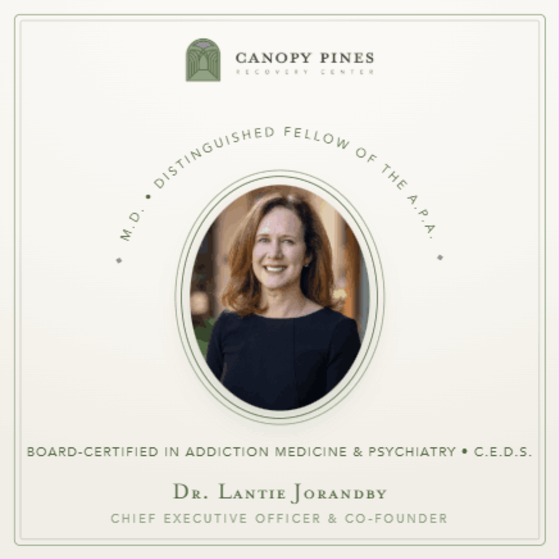
Founded and Led By Dr. Lantie Jorandby
Dr. Lantie Jorandby has dedicated her professional life to treating women with mental illness and addiction, and she is among the most credentialed addiction psychiatrists practicing in the United States today. She is triple board-certified in general psychiatry, addiction psychiatry, and addiction medicine.
History Of Equine Therapy
The therapeutic use of horses is not a modern day concept. The Greek physician Hippocrates is widely credited as the earliest known source to note the healing value of horseback riding, writing about its physical and emotional benefits as early as the fifth century BCE. The practice resurfaced in European medical writing over the following centuries, but it didn’t become a structured clinical discipline until the 1960s, when therapeutic riding centers began forming across Europe, Canada, and the United States.
A pivotal moment came at the 1952 Helsinki Olympics, when Danish rider Lis Hartel — who had been paralyzed by polio and regained much of her mobility through riding — won a silver medal in dressage. Her recovery drew international medical attention to horseback riding as a rehabilitative tool. Momentum built through the following decades: the North American Riding for the Handicapped Association formed in 1969, the American Hippotherapy Association was established in 1992, and organizations like the Equine Assisted Growth and Learning Association (EAGALA) and the Professional Association of Therapeutic Horsemanship International (PATH Intl.) later developed standardized training and credentialing specifically for the psychotherapy applications used in behavioral health settings today.
Typical Sessions in Equine Therapy
Contrary to a common assumption, most equine-assisted psychotherapy happens on the ground, not in the saddle. A typical session may include:
Observation: Residents watch the horse’s behavior and body language, which often becomes a mirror for discussing their own emotional state.
Grooming and haltering: Hands-on care tasks that build patience, present-moment focus, and a sense of nurturing capacity.
Ground-based exercises: Leading, directing, or setting up obstacles with the horse, which surfaces patterns around trust, boundaries, communication, and control.
Processing: A therapist guides the resident through the moments that occurred during the interaction, connecting it back to treatment goals.
Because horses are large, sensitive animals, safety is built into every stage — sessions are supervised by both a clinician and a trained equine specialist, and no prior riding experience is required.
How Equine Therapy Benefits Mental Health
The benefits of equine therapy in mental health treatment isn’t just anecdotal. A growing body of clinical research has looked at measurable outcomes, including brain imaging, stress hormone levels, and standardized symptom scales to understand what’s actually happening during treatment.
Emotional Regulation and Self-Efficacy
A randomized controlled trial conducted at a psychiatric hospital found that patients with substance use disorders who participated in weekly equine-assisted therapy sessions showed significant improvements in emotion regulation, self-efficacy, and self-esteem compared with a control group receiving standard care alone. A related study on equine-facilitated programs found meaningful gains in patients’ quality of life and clinical outcome scores over the course of treatment, alongside improvements in mood.
Equine Therapy for PTSD
Equine therapy’s benefits in treating PTSD has been studied most extensively in trauma populations. In a controlled study of military veterans, participants who added six weeks of equine-assisted psychotherapy to their existing PTSD care showed reduced PTSD symptom scores and increased resilience relative to those receiving standard treatment alone. A separate study of trauma survivors found that six weeks of equine-assisted sessions were associated with significant reductions in posttraumatic stress symptoms, anxiety, and depression, along with increased mindfulness and decreased alcohol use.
Brain imaging research adds a physiological layer to these findings. A longitudinal neuroimaging study of veterans with PTSD found that equine-assisted therapy was associated with measurable changes in brain regions tied to reward processing and fear response after treatment. A broader systematic review of research on equine-assisted services for veterans with PTSD concluded that the approach is associated with reduced depression and anxiety and improved quality of life.

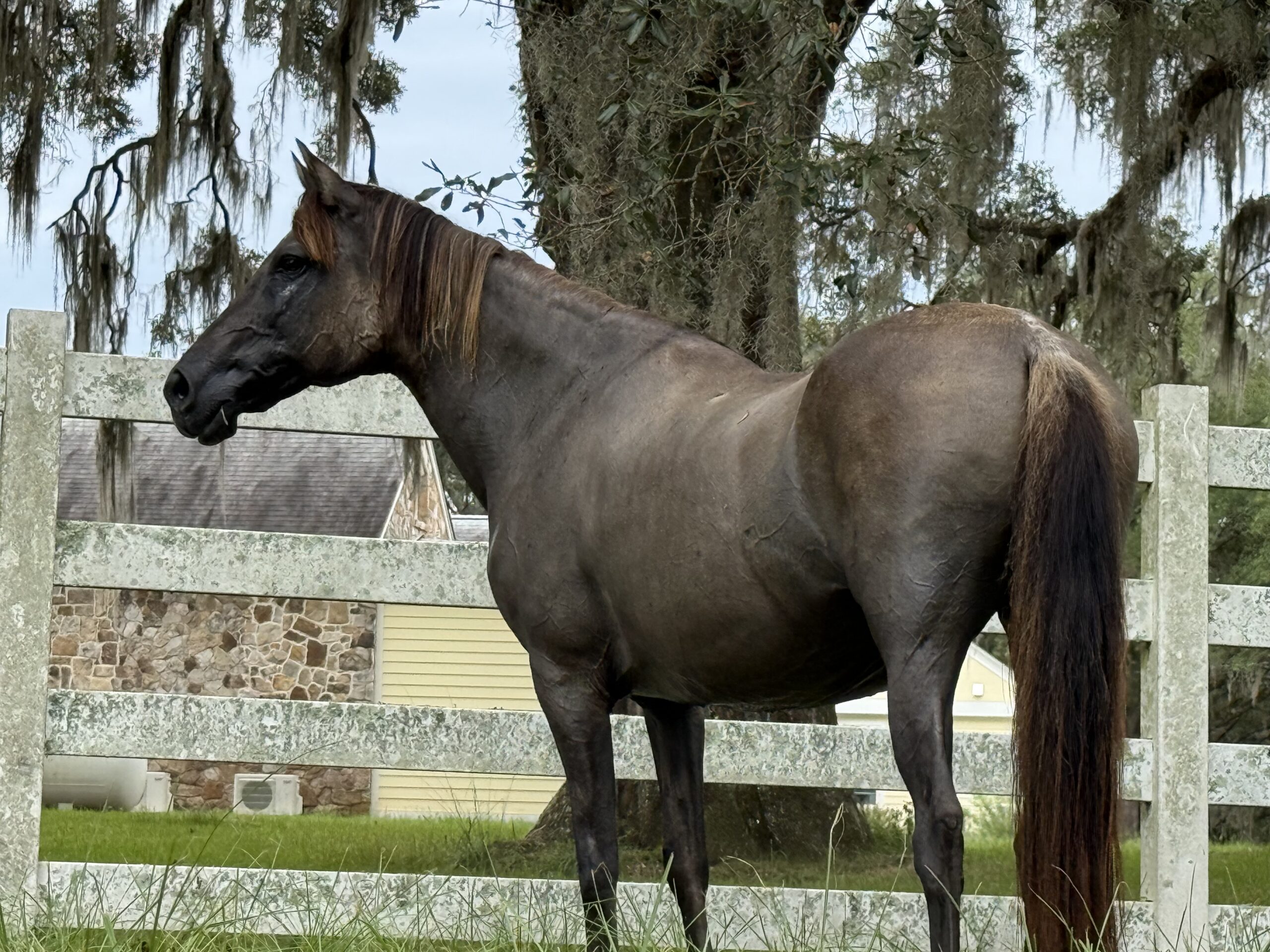
Nocana and Luna at Canopy Pines Recovery's stable
Equine Therapy's Treatment For Mental Health and Addiction In Women
Much of the existing clinical research on equine assisted therapy has been conducted in mixed-gender and veteran populations, but the underlying mechanisms; nonverbal emotional processing, nervous system regulation, and rebuilding trust through a nonjudgmental relationship, are directly relevant to the trauma histories that commonly co-occur with addiction and mental illness in women. Research on equine-assisted programs for substance use disorder has specifically pointed to improvements in self-esteem, emotion regulation, and self-efficacy — three areas that are frequently identified as treatment priorities in women-centered addiction treatment, where shame, trust, and a history of relational trauma often complicate recovery.
A review of equine-assisted services for people with substance use disorders similarly found consistent qualitative themes across studies, including improved self-esteem, self-efficacy, and emotional wellbeing among participants, while calling for more research that reports on gender-specific outcomes. This is part of why programs like Canopy Pines integrate equine work alongside other experiential therapies rather than relying on it as a standalone treatment. It complements, rather than replaces, evidence-based clinical care such as trauma therapy and other individual therapy sessions.

Highlighted Services
Residential
24 hour evidence-based care that treats addiction and mental health together. Every woman receives a full psychiatric evaluation and a customized treatment plan
Trauma Therapy
We understand that trauma is often deeply connected to substance use, emotional distress, and mental health struggles. Our highlighly certified experts are here to help
Medical Detox
For women who have become dependent, withdrawal can bring dangerous effects, including death. Medical detox at Canopy Pines provides 24-hour clinical oversight.

Medically Reviewed By Dr. Lantie Jorandby
Triple Board-Certified in Psychiatry, Addiction Psychiatry, & Addiction Medicine
Last Reviewed: June 2026