
Yoga Therapy Program For Women
How Yoga Supports Addiction Recovery and Mental Health for Women
Overview
When most people think of addiction treatment, they picture a therapist’s office or a group therapy circle. Yoga may not be the first thing that comes to mind — but for many women in recovery, it becomes one of the most transformative parts of the healing process. A structured yoga therapy program does something that talk therapy, on its own, often cannot: it brings the body into recovery.
Addiction and trauma live in the body as much as they live in the mind. Chronic stress, emotional pain, and substance use all leave physiological imprints — in muscle tension, breathing patterns, nervous system dysregulation, and the way a woman inhabits her own skin. Yoga therapy addresses those imprints directly, using movement, breath, and mindfulness to rebuild the mind-body connection that addiction disrupts.
At Canopy Pines, yoga therapy in Florida is woven into our experiential therapy programming as part of a comprehensive, women-specific approach to residential treatment. This article explains what yoga therapy is, what the research shows about its mental health benefits, and how it works within a residential addiction and mental health program.
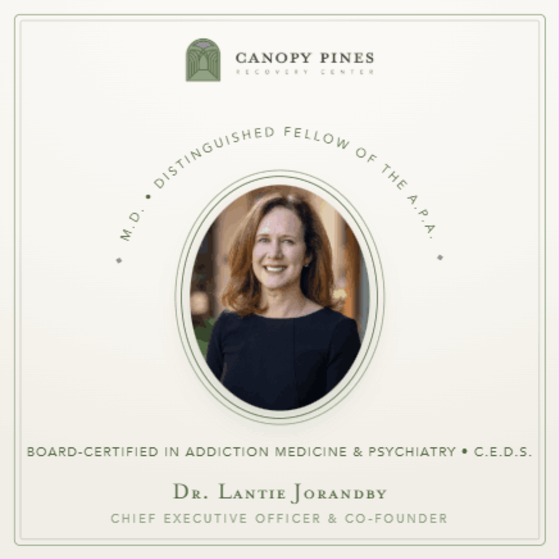
Founded and Led By Dr. Lantie Jorandby
Dr. Lantie Jorandby has dedicated her professional life to treating women with mental illness and addiction, and she is among the most credentialed addiction psychiatrists practicing in the United States today. She is triple board-certified in general psychiatry, addiction psychiatry, and addiction medicine.
What Is Yoga Therapy?
Yoga therapy is the clinical application of yoga practices — physical postures (asanas), breathwork (pranayama), mindfulness, and meditation — within a therapeutic context, tailored to the specific needs of an individual or group. It is distinct from a general fitness or wellness yoga class, and it is distinct from traditional talk therapy. It sits at the intersection of both.
According to the International Association of Yoga Therapists (IAYT), yoga therapy is defined as “the process of empowering individuals to progress toward improved health and well-being through the application of the teachings and practices of yoga.” In a clinical setting, a trained yoga therapist designs sessions around a person’s physical health, mental health history, trauma background, and current goals in treatment.
How Is a Yoga Therapy Program Different From a Yoga Class?
The difference matters, especially in a treatment context. A general yoga therapy class follows a set sequence designed for a broad audience — the instructor leads, the group follows, and the experience is largely the same for everyone in the room. A yoga therapy program is:
- Individualized — sessions are adapted to where each woman is physically, emotionally, and clinically on any given day
- Trauma-informed — poses and cues are chosen deliberately to avoid re-traumatization; participants are always offered choices rather than commands
- Clinically integrated — the yoga therapist works in coordination with the broader treatment team, including psychiatrists, therapists, and medical staff
- Therapeutically intentional — each element of the session serves a specific clinical purpose: nervous system regulation, grounding, body awareness, or emotional processing
In a residential treatment setting, yoga therapy is not an add-on or an amenity. It is a structured clinical modality that complements evidence-based treatments like cognitive behavioral therapy and dialectical behavior therapy by working through the body rather than through language alone.
Mental Health Benefits of Yoga
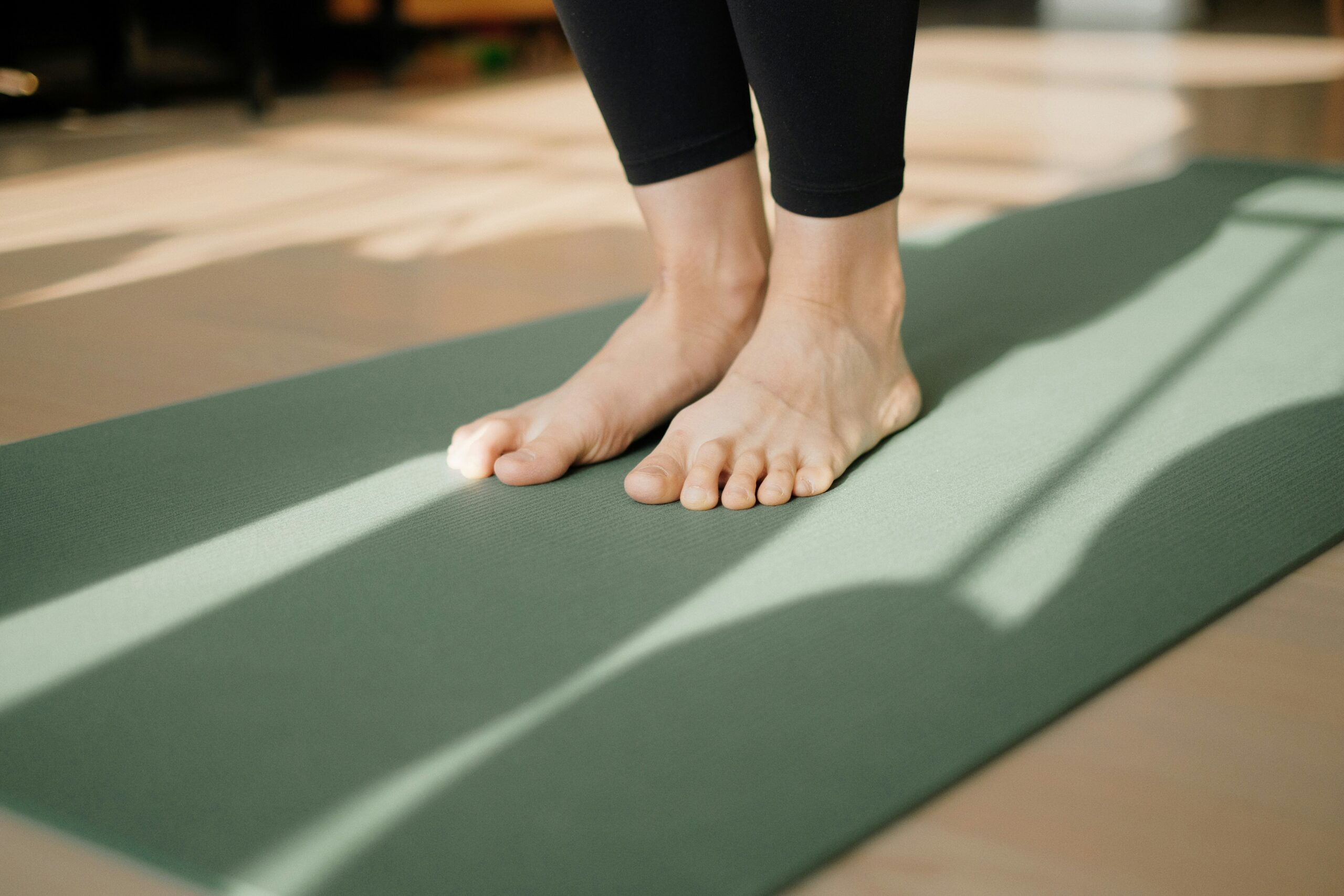
The mental health benefits of yoga are increasingly well-supported by clinical research. The National Center for Complementary and Integrative Health (NCCIH) — part of the National Institutes of Health — recognizes yoga as a evidence-informed complementary approach for stress reduction, anxiety, and depression. For women in addiction recovery and mental health treatment, those benefits are particularly relevant.
Yoga for mental health
- Works through several overlapping biological and psychological mechanisms:
- Slow, controlled breathing and gentle movement activate the parasympathetic nervous system — shifting the body out of the stress response (“fight or flight”) and into a calmer, more regulated state.
- Research has found that regular yoga practice lowers cortisol, the body’s primary stress hormone — reducing the physical burden of chronic stress that often underlies addiction and mental health conditions.
- Yoga builds interoception — the ability to sense what is happening inside the body. This awareness is a foundational skill for identifying and managing emotions before they escalate.
- A study published in the Journal of Alternative and Complementary Medicine found that yoga practitioners showed significantly greater increases in brain GABA levels than walking did — relevant for anxiety, as low GABA is associated with anxiety disorders.
- Mindfulness-based yoga practices help women recognize craving as a temporary physical sensation rather than an irresistible command — supporting the relapse prevention skills taught in other parts of treatment.
- Sleep disruption is extremely common in early recovery. Yoga’s calming effect on the nervous system has been shown to improve both sleep onset and sleep quality.
- Multiple clinical reviews have found yoga to be effective as an adjunct treatment for depressive disorders, with effects comparable to other forms of exercise in some studies.
- For women — many of whom enter treatment with complicated relationships to their bodies — yoga builds a gentler, more accepting relationship with physical self-awareness.
A 2012 systematic review in Frontiers in Psychiatry examined yoga as an intervention for psychiatric disorders and found "strong evidence" for yoga's efficacy in reducing symptoms of depression, anxiety, and stress, with emerging evidence for PTSD and schizophrenia. The authors concluded that yoga deserves consideration as part of integrative mental health treatment. Source: https://pubmed.ncbi.nlm.nih.gov/22502620/
How Does Yoga At Canopy Pines Help With Trauma? (Trauma Yoga Therapy)

Trauma is stored in the body. This is not a metaphor — it is a neurobiological reality well-documented by researchers including Dr. Bessel van der Kolk, whose research on trauma and the body has shaped modern understanding of PTSD and somatic treatment approaches. When a woman experiences trauma, her nervous system encodes the experience not just as memory but as physical sensation — muscle tension, startle response, altered breathing, chronic pain, and hypervigilance that can persist for years after the original event.
Trauma yoga therapy — specifically trauma-sensitive or trauma-informed yoga — is designed to help the nervous system safely process and release those stored physical responses. It differs from general yoga in important ways:
- Language is invitational (“you might try…”) rather than directive (“do this”)
- Participants always have the choice to modify, skip, or rest — restoring a sense of agency that trauma strips away
- Sessions avoid physical adjustments or hands-on assists unless explicitly consented to
- Poses are selected to build a sense of groundedness and safety in the body, rather than challenge or intensity
- The therapist is trained to recognize trauma responses and respond without escalating distress
A landmark randomized controlled trial published in the Journal of Clinical Psychiatry found that trauma-sensitive yoga significantly reduced PTSD symptoms in women with treatment-resistant PTSD — an important finding given how frequently trauma underlies women’s addiction and mental health presentations.
At Canopy Pines, trauma yoga therapy is offered alongside our trauma therapy program and EMDR, creating a multi-modal approach to trauma processing that addresses the body as well as the mind. Women who have PTSD or complex trauma histories often find that yoga opens doors to healing that talk therapy alone cannot reach.
How Does Yoga at Canopy Pines Help With Anxiety? (Yoga Therapy for Anxiety)
Anxiety is one of the most common reasons benzodiazepines and other sedating medications are prescribed — and one of the most common conditions driving substance use disorder in women. National Institute of Mental Health data shows that women experience anxiety disorders at nearly double the rate of men. For many women, anxiety and yoga therapy become deeply connected over the course of residential treatment.
Yoga therapy for anxiety works by directly targeting the physiological systems that anxiety hijacks. When anxiety is triggered, the sympathetic nervous system fires — heart rate rises, breathing becomes shallow, muscles tense, and the mind races. Yoga’s core tools — slow diaphragmatic breathing, deliberate movement, and sustained present-moment attention — work in the opposite direction, activating the parasympathetic response and quieting the alarm system.
Specific practices with strong evidence for anxiety include:
- Pranayama (breathwork) — techniques like 4-7-8 breathing, box breathing, and alternate nostril breathing have direct, measurable effects on heart rate variability and the nervous system’s stress response
- Restorative yoga — supported poses held for extended periods use props to create physical ease, allowing the nervous system to shift into deep rest
- Yoga nidra — a guided meditation practice conducted in a resting position that induces a state between wakefulness and sleep, shown to reduce anxiety and improve emotional regulation
- Mindful movement — slow, awareness-focused movement keeps attention anchored in present physical sensation rather than anxious thought loops
For women managing severe anxiety and depression alongside addiction, these practices provide a set of tools they can use independently — on the floor of their room, in a moment of stress, at any point in their day. That accessibility makes yoga one of the most practical long-term recovery skills a woman can develop in treatment.
How Does Yoga Work in Residential Treatment for Addiction and Mental Health?
Yoga for addiction recovery can be most effective when fully integrated into a residential treatment program, woven into the clinical schedule as a complement to individual therapy, group work, and psychiatric care. SAMHSA recognizes mindfulness-based practices, including yoga, as evidence-informed approaches within comprehensive addiction treatment.
In a residential setting, addiction recovery yoga supports treatment in several specific ways:
Building Body Awareness as a Recovery Skill
One of the central challenges of early recovery is learning to tolerate difficult internal states — cravings, anxiety, grief, boredom — without reaching for a substance. Many women in treatment have spent years using substances to avoid feeling their bodies entirely. Yoga, practiced regularly, gradually rebuilds the ability to be present in the body without being overwhelmed by it. This is not a small thing: it is one of the core competencies that makes sustained recovery possible.
Regulating the Nervous System During Detox and Early Recovery
The early weeks of residential treatment — particularly during and just after medical detox — are physiologically demanding. The nervous system, accustomed to chemical regulation, must relearn how to regulate itself. Gentle yoga and breathwork provide a non-pharmacological way to support that process, helping to reduce agitation, improve sleep, and lower the physical intensity of the early recovery experience.
Supporting Dual Diagnosis Treatment
The majority of women who enter residential treatment at Canopy Pines present with co-occurring mental health conditions alongside addiction — most commonly anxiety, depression, PTSD, or borderline personality disorder. Our dual diagnosis treatment model addresses both the addiction and the mental health condition concurrently. Yoga therapy contributes to that integrated approach by providing a somatic counterpart to the cognitive and emotional work happening in individual and group therapy.
Yoga as a Relapse Prevention Tool
One of the most practical reasons to develop a yoga practice in treatment is that it goes with you when you leave. Unlike a clinical intervention that requires a therapist’s office, yoga can be practiced at home, in a park, or in a hotel room. Women who build a consistent yoga practice in residential treatment have a portable, accessible tool for managing stress, reducing cravings, and re-centering themselves when life becomes difficult in recovery.
This is why yoga at Canopy Pines is introduced as a practice, not just a class — with the goal that women leave treatment with the knowledge and confidence to continue on their own as part of their aftercare plan.
Why Yoga Therapy for Women Works Differently

Yoga therapy for women in an addiction and mental health context carries specific considerations that are not present in co-ed programs. Many women entering treatment have complicated histories with their bodies — shaped by trauma, by eating and body image struggles, by the physical effects of long-term substance use, or simply by decades of receiving the message that their bodies are objects for others’ evaluation rather than instruments of their own experience.
A women-only yoga therapy program allows for a level of openness, vulnerability, and body-based exploration that is rarely achievable in mixed-gender settings. It also allows the therapeutic language and focus of sessions to be calibrated specifically to women’s experiences — something that matters more than it might initially seem. This is consistent with the broader principle that underlies everything at Canopy Pines: treatment for women works best when it is designed for women, not adapted from programs built around someone else’s experience.

Medically Reviewed By Dr. Lantie Jorandby
Triple Board-Certified in Psychiatry, Addiction Psychiatry, & Addiction Medicine