
Virtual IOP Program For Women
Our program, based out of Florida, allows women the flexibility to heal from addiction and co-occurring disorders without disrupting their lifestyles.
Intensive Outpatient Addiction Treatment From Home
When someone you love is struggling with addiction, the barriers to getting help can feel as immovable as the addiction itself; a job she can’t leave, children who need her, hours on the road she doesn’t have. A virtual IOP program is designed to remove those barriers. It brings the structure and clinical intensity of a treatment program into a woman’s own home, over a secure video connection, so she can begin serious recovery work without stepping away from the responsibilities holding her life together. Learn how a virtual intensive outpatient program works, how it differs from other levels of care, and what makes the women-only virtual IOP at Canopy Pines inclusive of the unqiue conditions that led to addiction, which men do not face.
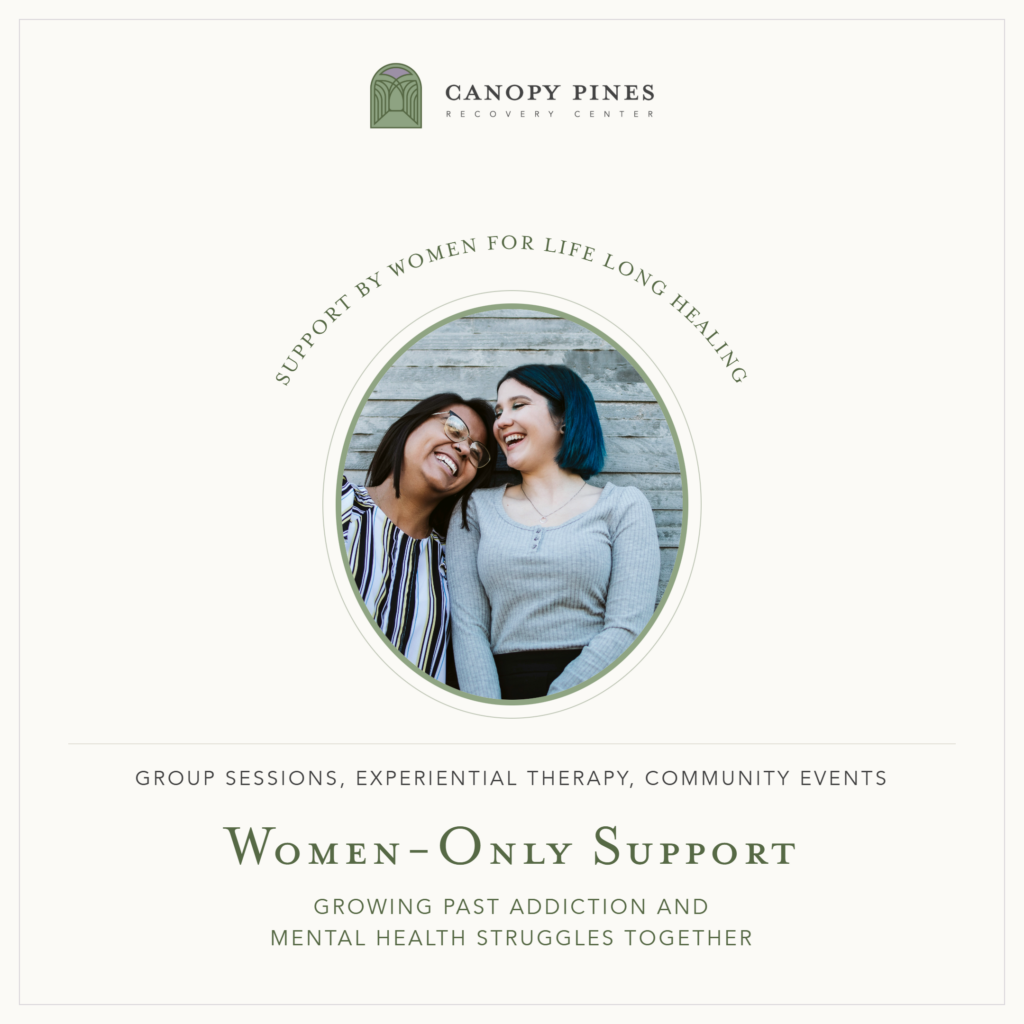
Treatment Created By Women For Women
What Is an IOP?
An intensive outpatient program (IOP) is a level of behavioral healthcare that sits between weekly therapy and residential treatment. It offers far more structure and clinical contact than a once-a-week appointment, but it does not require a woman to live at a facility or be supervised around the clock. IOPs are built for people who do not need medical detox or 24-hour monitoring, yet need more support than traditional outpatient therapy can provide. According to SAMHSA’s clinical guidance on intensive outpatient treatment, IOPs can be just as effective as inpatient and residential programs for most people who have a lower risk of withdrawal and less severe symptoms — improving abstinence rates and reducing the severity of substance use disorder symptoms.
That evidence base is strong, not anecdotal. A SAMHSA-supported systematic review published in the journal Psychiatric Services rated the level of evidence for IOPs as high, concluding that outcomes are comparable to inpatient care for most individuals who don’t require a 24-hour setting. For a woman who is ready to do the work but can’t disappear from her life for a month, that makes IOP one of the most practical evidence-based options available.
How Does a Virtual IOP Work?
A virtual IOP delivers that same programming through secure, HIPAA-compliant video conferencing rather than in a clinic. Instead of driving to a building, a woman logs in from a private space at home and joins live, with Canopy Pines on Zoom, with therapist-led sessions with a small, consistent group. The clinical ingredients don’t change: group therapy, individual therapy, and psychiatric care all happen in real time, with a licensed team on the other side of the screen. What changes is access.
Addressing Family Concerns
The concern families most often raise is whether treatment “counts” if it happens over video. The research says it does. A review of studies comparing telehealth and in-person addiction treatment in the peer-reviewed literature found telehealth to be as effective as in-person care in terms of retention, therapeutic alliance, and substance use outcomes. Federal researchers reached a similar conclusion: a National Institutes of Health study found that telehealth supports retention in addiction treatment and is safe and beneficial for the people who use it. Delivered well, a virtual IOP near you can be every bit as clinically serious as one down the street.
How a Virtual IOP for Women Differs From Other Addiction Treatment

It helps to picture the continuum of care as a set of steps. At the top is medically supervised residential treatment, where a woman lives on-site with 24-hour clinical support — the right choice when detox, medical stabilization, or an unsafe home environment is in the picture. A partial hospitalization program (PHP) is the next step down, with near-daily programming. A virtual IOP sits a step below that: usually several structured sessions per week, intensive enough to drive real change but flexible enough to work around a job, school, or caregiving.
Two differences matter most to families. First, a virtual IOP lets a woman stay in her own environment, which means she practices new coping skills in the exact place she’ll have to use them — a benefit SAMHSA specifically credits for building the self-confidence that behavior change requires. Second, it can work either as a step-down after residential or PHP care, extending support during the fragile transition home, or as a standalone program for a woman whose situation doesn’t call for a higher level of care. A brief clinical assessment is what determines the right fit — not a guess.
| Care Setting | Structure | Best Suited For |
|---|---|---|
| Residential / Inpatient | 24/7 supervised care, on-site psychiatric and medical support, immersive daily therapy | Women with moderate-to-severe co-occurring disorders, significant trauma history, or unstable living environments |
| Partial Hospitalization (PHP) | Structured full-day treatment, return home or to sober housing in the evening | Women stepping down from residential care or needing intensive support without 24/7 supervision |
| Intensive Outpatient (IOP) | Several hours of treatment a few days per week, alongside work or family responsibilities | Women with milder symptoms or strong existing support systems |
| Standard Outpatient | Weekly individual or group therapy sessions | Maintenance and long-term aftercare following a higher level of care |
Residential / Inpatient
- 24/7 supervised care, on-site psychiatric and medical support, immersive daily therapy
- Best for women with moderate-to-severe co-occurring disorders, significant trauma history, or unstable living environments
Partial Hospitalization (PHP)
- Structured full-day treatment, return home or to sober housing in the evening
- Best for women stepping down from residential care or needing intensive support without 24/7 supervision
Intensive Outpatient (IOP)
- Several hours of treatment a few days per week, alongside work or family responsibilities
- Best for women with milder symptoms or strong existing support systems
Standard Outpatient
- Weekly individual or group therapy sessions
- Best for maintenance and long-term aftercare following a higher level of care
How Has Virtual IOP Been Shown To Help Women With Addiction and Co-Occurring Conditions?
Women’s paths into addiction are not the same as men’s, and effective treatment has to reflect that. The National Institute on Drug Abuse notes that women can progress from first use to a substance use disorder more quickly than men — a pattern researchers call “telescoping” — and may be more susceptible to craving and relapse. Women with substance use disorders also carry significantly higher rates of trauma, PTSD, depression, and anxiety, and those conditions frequently come before the substance use rather than after it. NIDA is explicit that effective treatment for women should recognize sex and gender differences, address the trauma women often face, and account for caregiving responsibilities.
This is exactly where a virtual, women-only format earns its keep. Childcare and transportation are two of the most common reasons women never start or drop out of treatment; attending from home removes both. Privacy removes another — a woman in a small community can get help without her car being seen in a facility parking lot. And because trauma and addiction are so tightly linked for women, real recovery usually requires dual diagnosis treatment that addresses the mental health condition and the substance use together, alongside trauma-focused therapy. Treating only one rarely holds.
Why integration matters: Women with co-occurring disorders who receive integrated treatment show greater treatment retention and lower relapse rates than women who receive treatment for only one condition at a time.
Benefits of the Women's-Only Virtual IOP Program at Canopy Pines

Canopy Pines was built on a single conviction: women deserve addiction and mental health care designed entirely around their experience, not adapted from a model meant for someone else. That is a clinical position, not a marketing one — the evidence base for gender-responsive treatment is well established, and women treated in women-only settings are better able to speak openly about trauma, relationships, motherhood, and identity. Our virtual IOP extends that same women-only environment to anyone in Florida who needs the flexibility of treatment from home.
A Clinical Team Built Around Women's Recovery
What sets Canopy Pines apart is who is behind the screen. The program is founded and led by Dr. Lantie Jorandby, one of the most credentialed addiction psychiatrists practicing in the country today — triple board-certified in general psychiatry, addiction psychiatry, and addiction medicine, with an Addiction Psychiatry Fellowship from Yale, faculty experience at Harvard Medical School, and more than two decades treating women with addiction and mental illness. This is psychiatrist-led care, which means the mental health side of a co-occurring condition is treated with the same rigor as the addiction.
Just as important is continuity. The Canopy Pines model is built so the same multidisciplinary team supports a woman throughout her time in the program and plans deliberately for what comes next. For families and referring clinicians, that consistency is often the difference between a program a woman merely attends and one she actually trusts.
Inside the Canopy Pines Virtual IOP
he program is structured to be intensive and personal at the same time. Every participant receives a clinical evaluation up front so her plan reflects her specific history, diagnoses, and goals. Here is what the program looks like at a glance:
Delivered securely over Zoom.
- Sessions run on a private, HIPAA-conscious video platform, so a woman can participate from anywhere in Florida with an internet connection and a quiet, private space.
Trauma-focused and gender-responsive.
- Because trauma so often underlies women’s substance use, the curriculum is designed around trauma-informed care rather than treating it as an afterthought.
For women with substance use and co-occurring disorders.
- The program treats addiction alongside conditions like depression, anxiety, and PTSD together, in one coordinated plan.
8 to 12 weeks in duration.
- Long enough for real skill-building and stabilization, structured as a defined course of care rather than an open-ended commitment.
Individual, group, and psychiatric sessions.
- Each woman takes part in one-on-one individual therapy, peer-supported group therapy, and psychiatric sessions with prescribing support where appropriate.
For women 18 and older.
- The virtual IOP serves adult women; a brief intake confirms it’s the right level of care before anyone begins.
Is a Virtual IOP in Florida the Right Next Step?
A virtual IOP is often the right fit for a woman who needs more than weekly therapy, is medically stable, has a safe and private place to attend from, and can’t step away from work or caregiving for residential care. It’s also a natural continuing-care step for a woman coming home after detox or residential treatment who still needs structure while she rebuilds her routine.
It is not the right first step for everyone, and saying so is part of responsible care. A woman at risk of dangerous withdrawal, in acute crisis, or living in an environment that actively undermines recovery usually needs medically supervised detox or a higher, women-specific level of care first. The honest way to know is a confidential clinical assessment — which is exactly where a conversation with our admissions team begins. If you’ve been searching for a “virtual IOP near me” and you’re anywhere in Florida, this program was built to reach you.

Medically Reviewed By Dr. Lantie Jorandby
Triple Board-Certified in Psychiatry, Addiction Psychiatry, & Addiction Medicine