If you, or someone you love, is a chronic alcohol consumer and has decided to stop drinking, it may or may not be a good idea. Anyone who wants to detox at home should use this as guide on if it’s dangerous or not. Learn what to buy, what to expect, and how to help your loved ones.
The most useful thing you and loved ones can know about detoxing from alcohol at home is this: alcohol is one of the very few substances where stopping can be more dangerous than continuing. Not uncomfortable. Life treatening. People die from untreated alcohol withdrawal every year, and the people who die are often the ones whose families did not know what they were watching.

How Many People Detox from Alcohol at Home, and Why
There is no national count of how many Americans attempt alcohol detox at home, because nobody is tracking kitchens and spare bedrooms. What we can measure is the gap between how many people need help and how many get it.
According to the National Institute on Alcohol Abuse and Alcoholism, roughly 27.9 million people ages 12 and older had alcohol use disorder in the past year — about one in ten. Of those, only 7.6% received any alcohol treatment. That leaves more than 25 million people managing a diagnosable medical condition on their own.
Some of those people are drinking. Some are quitting. And the ones who are quitting are, by default, quitting at home.
The reasons are rarely reckless. Cost. Insurance confusion. Childcare. A job that will not hold. Not wanting anyone to find out. For women in particular, the fear of being judged as a mother or losing custody is a documented barrier to seeking care. Home detox usually is not a rejection of medical help — it is what is left when medical help feels out of reach.
What causes alcohol withdrawal
Alcohol slows the central nervous system. When someone drinks heavily for months or years, the brain compensates by speeding itself up — dialing down its calming chemistry and dialing up its excitatory chemistry to stay level.
Remove the alcohol and that compensation is suddenly unopposed. The nervous system, which has been pushing hard against a weight that is no longer there, goes into overdrive. That is withdrawal. It is not the body missing a substance; it is the body running without a brake.
The severity of withdrawal has more to do with how long and how consistently someone has been drinking than with how bad they seem right now.
Common withdrawal symptoms from alcohol
Early symptoms typically include anxiety, irritability, difficulty sleeping, sweating, nausea, loss of appetite, headache, a racing heart, and a tremor which usually visible first in the hands.
Those are the expected symptoms. Alcohol withdrawal syndrome spans a wide range of severity, from mild anxiety and shaking through to a life-threatening medical emergency, which is why the early picture is a poor predictor of where things end up.
What Level of Drinking is Generally Safe to Detox from at Home
This quick answer; there is no drink count that makes home detox safe. And a physician or medical expert should be consulted with for detoxing from any consistent drinking.
What clinicians can do is identify who is at elevated risk. Someone is more likely to experience a dangerous withdrawal if they have been drinking daily for an extended period, drink in the morning or during the night to stop shaking, have previously had a withdrawal seizure or delirium, have tried to stop before and felt severely ill, have liver disease, heart disease, or an infection, are older, are taking benzodiazepines or opioids alongside alcohol, or have an untreated mental health condition.
One of these factors deserves particular weight. Repeated withdrawal episodes make future ones worse — a phenomenon called kindling. Each unsupervised attempt to quit raises the risk of the next one. The person who says “I’ve done this before, I’ll be fine” is describing a risk factor, not a consistent truism.
If none of these apply and the drinking has been light and occasional, withdrawal is likely to be mild. If even one applies, the question is no longer whether home detox is comfortable. It is whether it is survivable, and that is not a judgment a family should be making alone. A physician can answer it in a single phone call.
How to Safely Detox from Alcohol at Home: The Timeline to Watch
Symptoms follow a rough sequence. Times vary by person, but the shape holds.
6 to 12 hours after the last drink. Anxiety, tremor, sweating, nausea, headache, insomnia, elevated heart rate. Uncomfortable but usually manageable.
12 to 24 hours. Symptoms intensify. Some people experience alcohol withdrawal hallucinosis — seeing, hearing, or feeling things that are not there while otherwise knowing they are not real. This is a warning sign that the withdrawal is not mild.
12 to 48 hours. The window in which withdrawal seizures are most likely to occur. They can happen without any earlier warning, in someone who appeared to be handling things.
48 to 96 hours. The window for alcohol withdrawal delirium, historically called delirium tremens or DTs. It affects roughly 3% to 5% of people in withdrawal and is characterized by profound confusion, disorientation, fever, severe agitation, racing heart, and hallucinations the person believes are real. Treated in a hospital, mortality is low. Untreated, published estimates have run far higher. Delayed onset up to a week after the last drink has been documented.

How long does it take to completely detox from alcohol
Acute physical withdrawal generally resolves within five to seven days. Alcohol itself clears the body much sooner than that — usually within a day.
But “detoxed” and “recovered” are different things. Sleep disturbance, anxiety, low mood, irritability, and cravings commonly persist for weeks or months as the nervous system recalibrates. Families who expect a switch to flip at day seven are often blindsided by week three, and that gap is where a lot of relapses live. It is also the strongest argument for continuing care after the acute phase ends.
At Home Supplies To Help With Detoxing
Nothing on this list treats withdrawal. These measures support someone whose withdrawal has already been assessed as low-risk by a clinician. They are not a substitute for that assessment.
- Fluids and electrolytes. Vomiting, sweating, and diarrhea deplete both. Water, broth, and oral rehydration solutions help.
- Food, even small amounts. Blood sugar drops during withdrawal. Something every few hours beats a full meal nobody can face.
- Thiamine and nutrition. Heavy drinking depletes thiamine (vitamin B1), and severe deficiency can cause lasting neurological damage. Supplementation is standard in medical detox — ask a physician rather than guessing at a bottle from the drugstore.
- A calm, quiet, low-stimulation room. Bright light and noise worsen agitation.
- Someone physically present, day and night. This is the single most important item on the list. Withdrawal can turn in an hour, and it frequently turns overnight.

What OTC medications help with withdrawal
Very little medicines will be a big relief for common symptoms. Over-the-counter medicine can take the edge off a headache or settle a stomach. It does nothing for the underlying process, and two common choices carry real risk for this particular population.
Acetaminophen is processed by the liver, which may already be compromised after prolonged heavy drinking. NSAIDs like ibuprofen and aspirin raise the risk of gastrointestinal bleeding, which heavy alcohol use also raises. Neither should be taken without asking a doctor or pharmacist first.
The medications that actually control alcohol withdrawal — benzodiazepines, and sometimes anticonvulsants or phenobarbital — are prescription-only, dosed against a symptom-severity scale, and require monitoring. Taking someone else’s leftover prescription is not a shortcut. Combining benzodiazepines with alcohol or with an unmonitored withdrawal is its own medical risk. This is the core of what medication management under clinical supervision provides and what a home setting cannot.
What to avoid during alcohol withdrawal
- Do not go to sleep alone in the house. Seizures and delirium commonly begin overnight.
- Do not taper by guesswork. Self-designed tapers often turn into continued drinking, and they delay care without reducing risk.
- Do not use other substances to cope. Benzodiazepines, opioids, sleep aids, and cannabis all complicate the picture and can mask the symptoms you need to see.
- Do not assume a calm evening means it is over. The most dangerous window opens on day two or three, after the worst appears to have passed.
- Do not leave firearms, car keys, or medications accessible. Confusion and impaired judgment are symptoms, not choices.
Why Trying to Detox from Alcohol Fast at Home is the Wrong Goal
This is topics people searched heavily for, but there is no way to speed up alcohol withdrawal, and no supplement, drink, sauna, or protocol that shortens it.
Alcohol leaves the bloodstream at a fixed rate that nothing accelerates. What takes days is not the alcohol clearing — it is the nervous system re-regulating. That process runs on its own clock.
Attempts to rush it usually mean stopping abruptly from a heavy daily intake, which is the exact scenario most likely to produce a seizure or delirium. The desire to get it over with is completely understandable. It is also the specific impulse that turns a manageable withdrawal into an emergency.
Talk to Someone Before She Tries This Alone

If you are reading this because someone you love is about to stop drinking, the most useful thing you can do today is make one phone call — either to her physician or to a treatment program that can assess her risk.
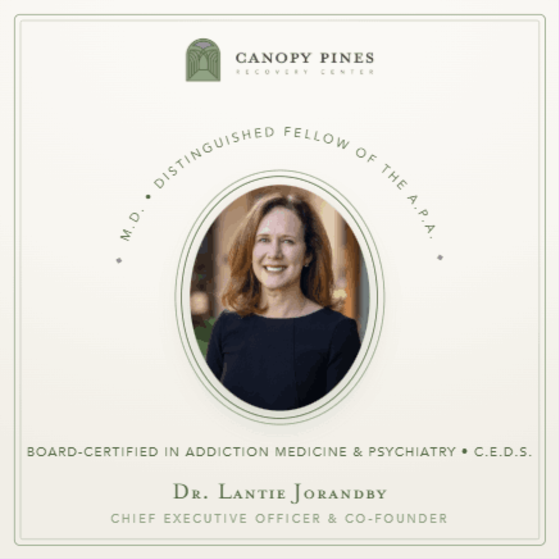
Canopy Pines Recovery is a women-only medical detox and residential treatment program on 30 acres outside Tallahassee, Florida, led by Dr. Lantie Jorandby, triple board-certified in psychiatry, addiction psychiatry, and addiction medicine. Admissions conversations are confidential, and there is no obligation.
Call in the link above or chat with us on the bottom right to speak with our admissions team, or verify your insurance benefits before you decide anything.
If someone is showing signs of severe withdrawal right now — seizure, confusion, fever, or hallucinations — call 911. Do not wait.