
Xylazine Treatment For Women in Tallahassee, Florida
What Families and Clinicians Need to Know About Tranq Dope
Key Takeaways
- Xylazine is a veterinary sedative, not an opioid, but it is almost always mixed with fentanyl.
- Narcan does not reverse xylazine. Give it anyway during a suspected overdose, because fentanyl is usually present.
- Xylazine can cause slow-healing skin wounds and a difficult withdrawal that benefits from medical supervision.
- Florida recorded 550 deaths with xylazine present in 2023, with the Jacksonville area reporting the most.
- Effective treatment combines medical detox, wound care, residential therapy and a strong aftercare plan.
If someone you love uses fentanyl or other street opioids, there is a good chance they have also been exposed to xylazine, even if they were unaware of it. Known on the street as “tranq” or “tranq dope,” xylazine is an animal sedative that has spread through the illicit drug supply, including across Florida and the Southeast. It causes deep sedation, severe skin wounds and a withdrawal that standard opioid care does not fully address.
But how prominant is it and how does it effect women?
Treatment Created By Women For Women
Canopy Pines Recovery understands women go through unique situations that can lead to mental health and substance abuse issues. Our program is built by experienced, credentialed women, using evidence-based studies, to address those specific needs for the highest chance at lasting recovery. Withdrawal is easier, and safer, with medical support. Our team can walk you through detox options today.
What Is Xylazine?
Xylazine is a sedative, muscle relaxant and pain reliever used in veterinary medicine, most often for large animals like horses. The CDC describes it as a nonopioid sedative that is not approved for use in humans and has been increasingly found in the illegal drug supply. In 2023, the White House Office of National Drug Control Policy declared fentanyl mixed with xylazine as an emerging threat to the United States.
What Is Xylazine Made Of?
Xylazine is a lab-made chemical compound, not a plant-based drug. It is a structural cousin of clonidine that Bayer discovered in Germany in 1962 while developing blood pressure medications. It was never approved for people. Instead, it became a common animal tranquilizer sold as a liquid for injection.
On the street, xylazine is usually added to other drugs rather than sold on its own. According to the CDC, it is mixed into cocaine, heroin and fentanyl to enhance their effects or add weight, which increases their illegal value. Many people who use these drugs do not know xylazine is in them.
Street Names Explained: Tranq Drug, Tranq Dope and Others
- Tranq or tranq drug, short for tranquilizer
- Tranq dope, usually meaning fentanyl or heroin mixed with xylazine
- Anestesia de caballo, Spanish for “horse anesthetic”
- Rompun, one of its veterinary brand names
- Zombie drug, a nickname used in news coverage because of its heavy sedation and visible wounds

Is Xylazine an Opioid?
No. Xylazine belongs to a drug class called alpha-2 adrenergic agonists, the same class as clonidine and dexmedetomidine. It slows the central nervous system by reducing the release of norepinephrine, which produces sedation and lowers blood pressure and heart rate.
Because xylazine is not an opioid, opioid reversal medication cannot undo its effects.
How Does Xylazine Compare to Fentanyl?
Xylazine and fentanyl are different drugs, but they are rarely found apart. National death certificate data shows that 99.1% of xylazine-involved overdose deaths in 2021 also involved fentanyl.
| Xylazine | Fentanyl | |
|---|---|---|
| Drug type | Nonopioid sedative (alpha-2 agonist) | Synthetic opioid |
| Approved for people? | No, veterinary use only | Yes, as a prescription painkiller |
| Reversed by Narcan? | No | Yes |
| Main overdose danger | Deep sedation, slow heart rate, low blood pressure | Stopped breathing |
| Signature side-effect | Slow-healing skin wounds | High overdose risk at tiny doses |
When the two are combined, the sedation from xylazine stacks on top of the breathing suppression from fentanyl. That combination is one reason xylazine can be life threatening, especially when combined with opioids.
Xylazine Side Effects
The CDC lists the main xylazine side effects seen in overdose as:
- Heavy sedation and central nervous system depression
- Slowed or shallow breathing
- Slow heart rate (bradycardia)
- Low blood pressure (hypotension)
- Pinpoint pupils
- High blood sugar
These effects are documented in the CDC’s xylazine clinical fact sheet. NIDA adds that xylazine can push breathing, heart rate and blood pressure to dangerously low levels.
What is Xylazines Relation to Fentanyl and Other Opioids?
Xylazine and fentanyl are different drugs, but they are rarely found apart. National death certificate data shows that 99.1% of xylazine-involved overdose deaths in 2021 also involved fentanyl.
| Xylazine | Fentanyl | |
|---|---|---|
| Drug type | Nonopioid sedative (alpha-2 agonist) | Synthetic opioid |
| Approved for people? | No, veterinary use only | Yes, as a prescription painkiller |
| Reversed by Narcan? | No | Yes |
| Main overdose danger | Deep sedation, slow heart rate, low blood pressure | Stopped breathing |
| Signature side effect | Slow-healing skin wounds | High overdose risk at tiny doses |
When the two are combined, the sedation from xylazine stacks on top of the breathing suppression from fentanyl. That combination is one reason xylazine can be life threatening, especially when combined with opioids.
Prominant Xylazine Side Effects
The CDC lists the main xylazine side effects seen in overdose as:
- Heavy sedation and central nervous system depression
- Slowed or shallow breathing
- Slow heart rate (bradycardia)
- Low blood pressure (hypotension)
- Pinpoint pupils
- High blood sugar
These effects are documented in the CDC’s xylazine clinical fact sheet. NIDA adds that xylazine can push breathing, heart rate and blood pressure to dangerously low levels.
Short-Term Health Effects
In the hours after use, xylazine can cause:
- Sedation so deep that a person cannot be woken
- Dangerously slow breathing, especially with fentanyl
- Slow heart rate and very low blood pressure
- Overdose, and in extreme cases cardiac arrest
- Injuries from falls or long periods of lying in one position while sedated
Long-Term Health Effects
With repeated use, the risks build:
- Chronic wounds and infections that heal slowly and can lead to amputation
- Physical dependence, with withdrawal symptoms when use stops
- A more severe opioid use disorder, since xylazine extends the effects of fentanyl and keeps people using
- Worsening mental health, including anxiety and depression tied to withdrawal, pain and isolation
How Xylazine Affects Women vs. Men
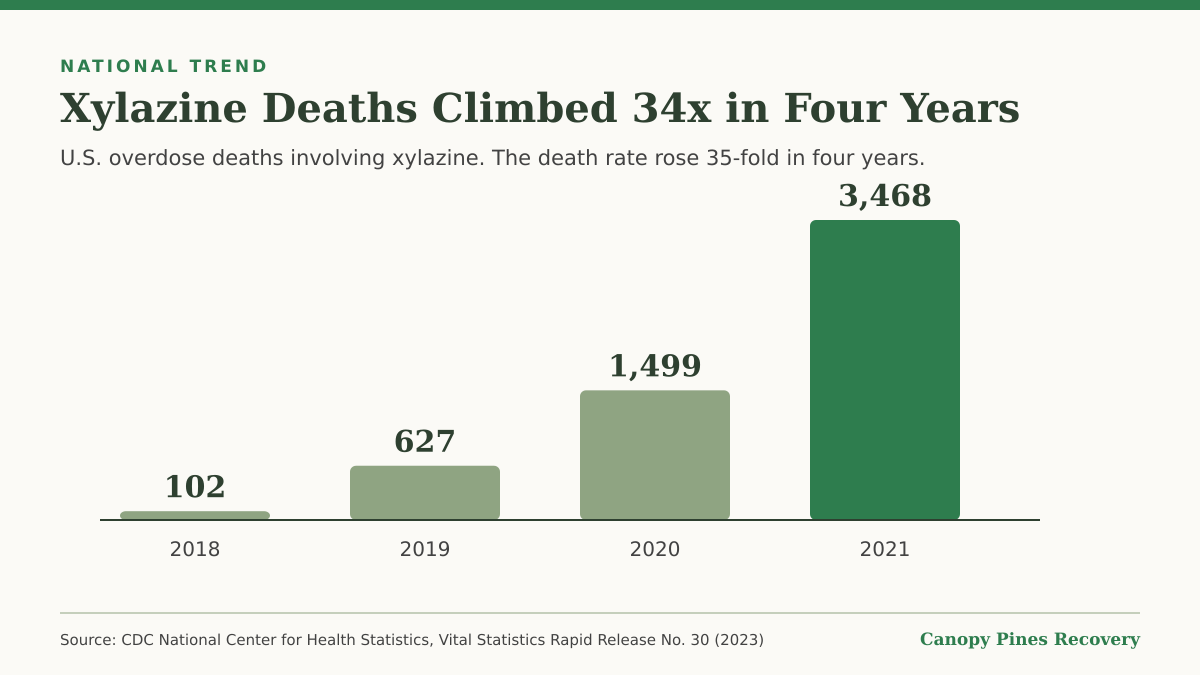
Men die from xylazine-involved overdoses more often than women. CDC data shows that death rates for men were at least double the rates for women every year from 2018 to 2021. Still, 938 women died from overdoses involving xylazine in 2021 alone, and the numbers are climbing fast.
Closer to home, the Georgia Department of Public Health found that from 2020 to 2022, xylazine overdose deaths increased faster among women (1,380%) than among men (1,282%). Women also tend to progress from first use to addiction faster than men, which means a woman’s exposure to tranq dope can become a serious problem in less time.
Xylazine Risks for Pregnant Women
Research on xylazine in pregnancy is extremely limited. The Minnesota Department of Health notes there is no published evidence about pregnancy and xylazine, but similar drugs like clonidine are used with caution because they can change heart rate and blood pressure in both the mother and the fetus.
Because xylazine is almost always mixed with fentanyl, pregnant women also face the risks of opioid exposure. The CDC warns that quickly stopping opioids during pregnancy can lead to preterm labor, fetal distress or miscarriage, and recommends medication for opioid use disorder rather than supervised withdrawal. A pregnant woman exposed to tranq dope should never try to detox on her own. She needs a coordinated plan with her obstetric and addiction care providers.
What Are Xylazine Skin Wounds?
Xylazine skin wounds are one of the drug’s most recognizable harms. They often begin as small sores or blisters and can grow into deep, painful ulcers with dead tissue. Researchers believe xylazine narrows blood vessels and reduces blood flow to the skin, which starves tissue of oxygen and slows healing.
These wounds are serious. The CDC warns that untreated wounds can lead to amputation or become life threatening, while wounds treated early can usually be managed with basic wound care. If you notice a wound on a loved one that is getting larger, darker or more painful, encourage them to get medical care right away.
Because xylazine is almost always mixed with fentanyl, pregnant women also face the risks of opioid exposure. The CDC warns that quickly stopping opioids during pregnancy can lead to preterm labor, fetal distress or miscarriage, and recommends medication for opioid use disorder rather than supervised withdrawal. A pregnant woman exposed to tranq dope should never try to detox on her own. She needs a coordinated plan with her obstetric and addiction care providers.
Xylazine Withdrawal Symptoms
People who use xylazine regularly can develop physical dependence. The CDC notes they may experience severe withdrawal symptoms such as irritability, anxiety and dysphoria after stopping abruptly. A review in the American Journal of Psychiatry Residents’ Journal describes xylazine withdrawal as a rebound of the nervous system similar to acute clonidine withdrawal, which can include swings in blood pressure and heart rate.
Common xylazine withdrawal symptoms include:
- Intense anxiety and restlessness
- Irritability and agitation
- Low mood or dysphoria
- High blood pressure and a racing heart
- Opioid withdrawal symptoms at the same time, since fentanyl is usually involved
How Common Is Xylazine Use Within Florida, Georgia and Alabama?
Xylazine in Florida: Statistics and Trends
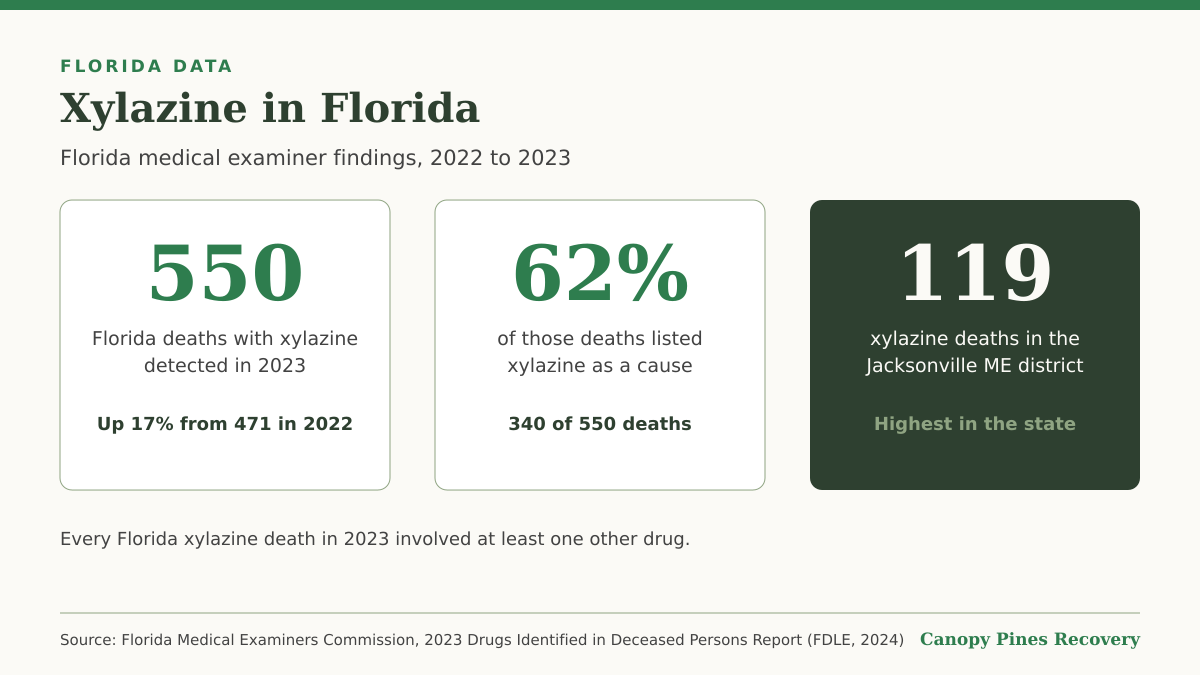
Xylazine deaths in Florida are still rising. According to the Florida Medical Examiners Commission, xylazine was found in 550 deaths in 2023, up from 471 in 2022. Medical examiners listed xylazine as a cause of death in 62% of those cases, and every one of those deaths involved at least one other drug.
North Florida is not immune. The Jacksonville medical examiner district, which covers Duval, Clay and Nassau counties, recorded 119 xylazine deaths in 2023, the most of any district in the state. State crime labs have also seen the drug climb: Florida officials reported that xylazine went from the 11th most frequently identified drug in 2021 to the sixth most frequent in 2023.
Early 2024 data shows a mixed picture. In the first half of 2024, xylazine occurrences fell 15%, but deaths caused by xylazine rose 10%. Florida also lists xylazine as a Schedule I controlled substance under state law, even though it is not federally controlled.
Xylazine in Georgia and Alabama
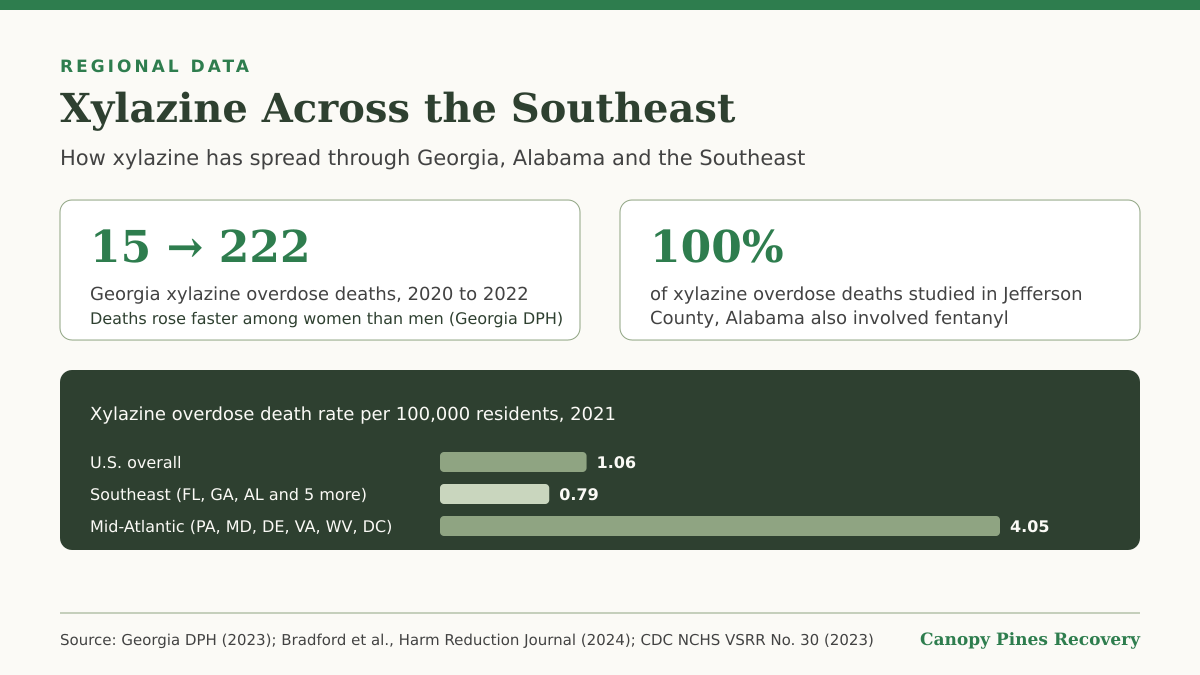
Georgia saw one of the sharpest increases in the region. State data shows xylazine-involved deaths rose from 15 in 2020 to 222 in 2022, growing from less than 1% to 9% of all overdose deaths. Every suspected xylazine death in Georgia in 2022 also involved fentanyl.
In Alabama, a study of autopsy data from Jefferson County (Birmingham) found that xylazine has been consistently present in overdose deaths since January 2021. All of those deaths involved fentanyl, and 75.4% also involved stimulants such as cocaine or methamphetamine. The researchers concluded that xylazine is now prevalent in the Deep South.
How the Southeast Compares to the Rest of the Country
Xylazine first took hold in the Northeast, which still has the highest rates. In 2021, the CDC recorded a xylazine overdose death rate of 0.79 per 100,000 people in the Southeast region, which includes Florida, Georgia and Alabama, compared with 1.06 nationally and 4.05 in the Mid-Atlantic.
The Southeast, however, is where the drug has spread fastest. A DEA intelligence report found that xylazine-positive overdose deaths in the South jumped from 116 in 2020 to 1,423 in 2021, a 1,127% increase and the largest of any region.
Medetomidine and Xylazine Test Strips
A newer veterinary sedative called medetomidine is now showing up in the opioid supply, sometimes in place of xylazine. In Philadelphia, the CDC documented 165 hospitalized patients with a severe withdrawal syndrome that did not respond to standard fentanyl and xylazine withdrawal medications. Families should know that the drug supply keeps changing, which makes medically supervised detox even more important.
Xylazine test strips are one harm reduction tool families may hear about. The CDC notes that commercially available test strips can detect xylazine in a drug sample. Test strips can reduce risk, but they cannot make street drugs safe. The safest path is treatment.
Xylazine Addiction Treatment: The Benefits Of Residential Care
Because xylazine almost always arrives with fentanyl, effective xylazine addiction treatment treats both the opioid use disorder and the problems xylazine adds, including wounds, sedation and a complicated withdrawal.
A women-only setting adds something a mixed-gender program cannot. Women in early recovery frequently need to talk about trauma, sexual violence, motherhood, custody, body image, and relationship dynamics that they are likely not raise in a room with men present. Removing that barrier changes what happens in the first two weeks of treatment — and the first two weeks set the trajectory for everything after.

Opioid Detox in Florida: Common Procedures and Medications for Xylazine
There is currently no antidote for xylazine and no standardized withdrawal protocol. A systematic review of published cases found that clinicians generally prioritize treating opioid withdrawal and use alpha-2 agonists such as clonidine for xylazine-related symptoms, with alternatives like tizanidine, lofexidine and guanfacine.
A medically supervised detox for xylazine and fentanyl typically includes:
- A full medical assessment of substance use history, vital signs and any wounds.
- Evidence-based medication for opioid withdrawal, chosen and monitored by a physician.
- Targeted medication for xylazine-related symptoms such as anxiety, high blood pressure and a racing heart.
- Wound assessment and care, with referral to specialists when needed.
- Around-the-clock monitoring, with transfer to hospital-level care if withdrawal becomes severe.
For a woman going through opioid detox in Florida, this level of supervision makes the difference between a frightening, unsafe withdrawal and a stable first step into recovery.
Does Narcan Work for Xylazine?
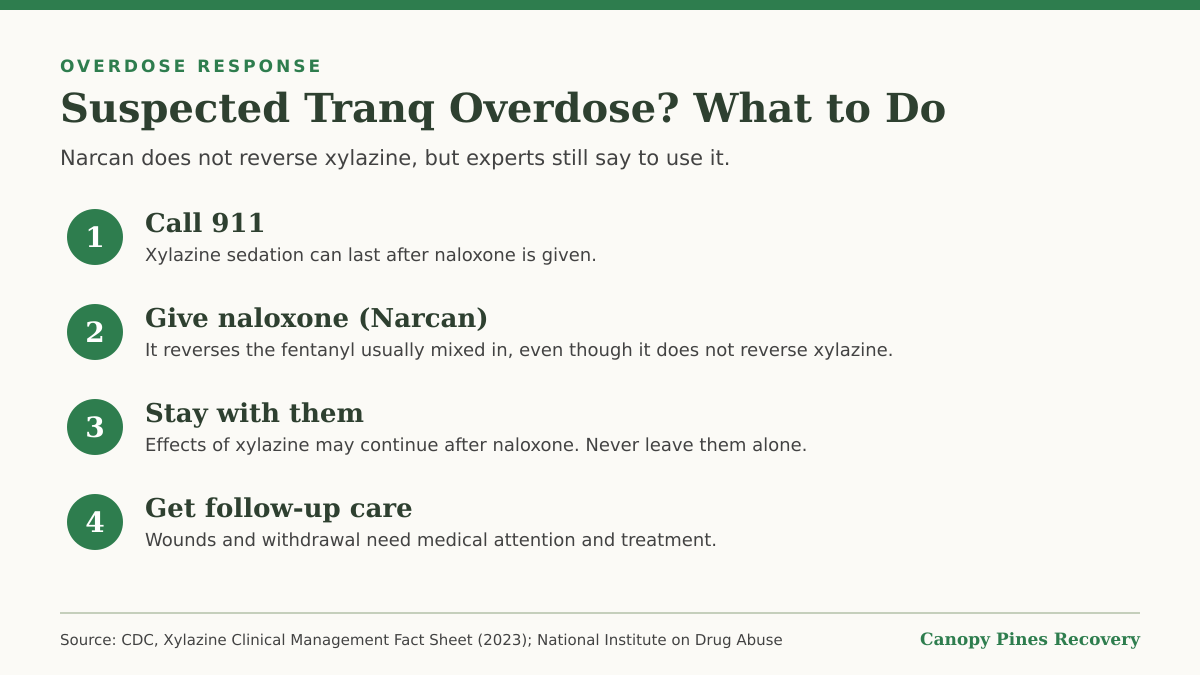
No. Naloxone (Narcan) does not reverse xylazine because xylazine is not an opioid. However, NIDA and the CDC both say to give opioid overdose reversal medication anyway when an overdose is suspected, since opioids are usually present. The CDC also cautions that the effects of xylazine may continue after naloxone is given, so always call 911 and stay with the person.
Benefits of Residential Treatment for Opioid Addiction
Detox is only the beginning. NIDA’s research-based treatment principles state that detoxification alone is rarely enough to support long-term recovery and that the best outcomes come from staying in treatment long enough.
Residential treatment offers:
- A safe, substance-free setting away from a contaminated drug supply
- Daily medical oversight while wounds heal and the body stabilizes
- Individual, group and family therapy to address the reasons behind use
- Time to build coping skills before returning to everyday stress
At Canopy Pines, residential care is designed exclusively for women. Our women’s fentanyl addiction treatment program addresses the opioid use disorder that nearly always comes with xylazine exposure.
- Cognitive behavioral therapy (CBT) — identifying the thought patterns that precede use and building alternative responses
- Dialectical behavior therapy (DBT) — distress tolerance and emotional regulation skills, particularly useful where self-harm or intense mood swings are present
- EMDR and other trauma-focused therapies — processing traumatic memory without requiring the person to narrate it repeatedly
- Individual therapy — consistent one-to-one work with the same clinician throughout the stay
- Group therapy — peer connection with other women, which reduces the isolation and shame that sustain opioid use
- Family therapy — repairing relationships and giving families a realistic picture of what recovery asks of everyone
- Experiential and expressive therapies — art, movement, and mindfulness work that reaches material talk therapy sometimes cannot

Xylazine Addiction Treatment for Women: How Dual Diagnosis Care Helps
Many people who use tranq dope are also living with depression, anxiety, PTSD or trauma. NIDA notes that many people with addiction also have other mental disorders and that treatment should address both. The CDC similarly points out that women with opioid use disorder may also have depression and anxiety that need screening and care.
Dual diagnosis treatment treats substance use and mental health together, under one team. For women recovering from xylazine and fentanyl, that can mean:
- Psychiatric evaluation and medication management for co-occurring conditions
- Trauma-informed therapy, since trauma often drives substance use in women
- Therapies such as CBT and DBT to manage cravings, anxiety and emotional pain
- Support for the shame and stigma that visible wounds can bring
Benefits of Experiential Therapy for Xylazine and Opioid Treatment
Talk therapy is not the only way to heal. Experiential therapy uses hands-on activities like art, movement, yoga and equine-assisted work to help women process emotions they may not be able to put into words yet. For someone coming off a heavy sedative, these activities can help:
- Reconnect with the body in a safe, positive way
- Lower stress and anxiety during early recovery
- Build trust, confidence and self-worth
- Practice staying present instead of numbing difficult feelings
Experiential therapy works best alongside medical care and evidence-based therapy, not in place of them.
How Canopy Pines' Aftercare Program Helps Long Term Sobriety From Xylazine Addiction
Recovery from opioid and xylazine use does not end at discharge. According to NIDA, 40% to 60% of people treated for substance use relapse, a rate similar to other chronic illnesses like asthma and high blood pressure. Relapse does not mean treatment failed. It means ongoing support matters.
A strong aftercare program can include:
- Step-down care such as a partial hospitalization or virtual intensive outpatient program
- Continued therapy and psychiatric follow-up
- Ongoing medication management for opioid use disorder
- Follow-up medical care for wounds that are still healing
- Peer support, sober living options and a relapse prevention plan
- Naloxone education for the woman and her family, since tolerance drops after treatment
What To Expect When You Call
- Call or submit a form. An admissions coordinator answers your questions and checks your insurance, usually the same day.
- Pre-admission assessment. A short phone screening covers your substance use, health and any pregnancy so we can plan safe detox.
- Medical detox. On arrival, our medical team manages withdrawal with buprenorphine and round-the-clock monitoring.
- Residential treatment. Daily therapy, wellness activities and medication management in a women-only community. Typical stays run 14 to 30 days.
- Step-down care. Continue with partial hospitalization, intensive outpatient or virtual IOP, plus a written relapse prevention plan and naloxone at discharge.
Frequently Asked Questions About Xylazine Addiction Treatment
Is xylazine an opioid?
No. It is a veterinary sedative in the same drug class as clonidine. Because it is almost always mixed with fentanyl, most people exposed to it also need opioid addiction treatment.
Does Narcan work on xylazine?
Narcan does not reverse xylazine, but you should still give it during any suspected overdose because fentanyl is usually present. Call 911 and stay with the person.
Can xylazine wounds heal?
Yes. Wounds treated early can usually be managed with basic wound care. Stopping use and getting medical care gives them the best chance to heal.
Is xylazine illegal in Florida?
Yes. Florida lists xylazine as a Schedule I controlled substance, with exceptions for approved veterinary use.
Ways We Help Xylazine Addiction in Tallahassee
Canopy Pines is a women-only detox and residential treatment center on 30 acres outside Tallahassee. Treatment is designed and led by Dr. Lantie Jorandby, triple board-certified in psychiatry, addiction psychiatry, and addiction medicine. Here, recovery isn’t rushed. It’s supported by structure, open land, and time in the shade to truly heal. View treatment options

Medically Reviewed By Dr. Lantie Jorandby
Triple Board-Certified in Psychiatry, Addiction Psychiatry, & Addiction Medicine