- Residential treatment provides full clinical care. You live at the facility and get 24/7 medical and psychiatric support plus daily therapy sessions. Treatment typically last 14 to 90 days.
- Sober living is substance-free housing, not treatment. Residents pay rent, follow house rules, and practice recovery while working or attending outpatient care.
- Residential treatment is best for people who have withdrawal risk, repeated relapse, co-occurring mental health conditions, or an unsafe home. Sober living is best once someone is stable but not ready to go home.
Many women do best using both, in order: detox and residential care first, then sober living with outpatient therapy.
Sober living and residential treatment both involve living away from home, but they serve very different purposes. This guide explains what each option is, how they differ, and who each one fits best, so families and healthcare professionals can choose with confidence.

What Is Residential Treatment for Drug and Alcohol Addiction?
Residential treatment is a clinical level of care where a person lives at a licensed facility and receives treatment around the clock. A team of physicians, nurses, therapists, and psychiatric providers delivers care every day. Programs commonly last about 28 to 90 days, and many begin with medical detox so withdrawal can be managed safely.
How Residential Treatment Helps Addiction Recovery
- 24/7 medical and psychiatric support to manage withdrawal, cravings, and medications.
- Daily evidence-based therapy, including individual and group sessions using approaches like equine assisted therapy, CBT, DBT, and EMDR.
- Treatment for co-occurring conditions, such as depression, anxiety, or trauma, through dual diagnosis care.
- Distance from triggers, including people, places, and stress at home.
- Enough time to change. The National Institute on Drug Abuse reports that most people need at least three months in treatment to significantly reduce or stop drug use, and longer care is linked to better outcomes.
Requirements for Residential Treatment
Inital admission is based on a clinical evaluation and agreement to follow the rules of the facility, usually put in a patient handbook. Most programs require:
- A clinical assessment showing that a lower level of care is not enough.
- Medical stability for the setting, or onsite detox when withdrawal is expected.
- Willingness to take part in daily therapy and follow program rules.
- Insurance verification or a payment plan.
What Is Sober Living?
Sober living homes are substance-free group residences for people working to stay sober. Researchers describe them as abstinence-based homes built on peer support rather than professional treatment. Residents pay rent, share chores, and follow house rules such as curfews, drug testing, and attending recovery meetings. Stays are flexible; in one large study, the average stay was about five and a half months.
Is Sober Living the Same Thing as a Halfway House?
The terms are often used interchangeably, but there are differences. Halfway houses are more often publicly funded, tied to a treatment or correctional program, and set time limits on stays. Sober living homes are usually privately run, paid for by residents, and open-ended. In Florida, both fall under the broader term “recovery residence,” and homes can earn voluntary state certification.

Are Sober Living Homes Non-Profit?
Some are and some are not. Many sober living homes are for-profit businesses, while others are run by nonprofits or by the residents themselves. Costs vary widely: one study showed monthly fees ranged from about $372 to $4,000. Whatever the business model, look for a home that follows SAMHSA’s best practices for recovery housing. In Florida, licensed treatment providers can only refer patients to certified recovery residences, which makes certification a useful quality signal.
How Sober Living Helps Recovery
Sober living gives people a stable, drug- and alcohol-free place to practice recovery in real life: going to work, managing money, and handling stress without a clinical team down the hall. Housemates provide accountability and understanding. Research has found that sober living residents used fewer substances over 18 months, with improvements in psychiatric symptoms and employment.

Requirements for Sober Living
Rules differ by home, but most require residents to:
- Be free of alcohol and drugs, and past acute withdrawal.
- Agree to random drug and alcohol testing.
- Pay rent and share household responsibilities.
- Attend recovery meetings or outpatient treatment.
- Work, go to school, or volunteer.
Can You Go to Sober Living Without Rehab?
Often, yes. Many homes accept residents who have not completed a treatment program. But sober living cannot manage withdrawal, which can be dangerous for people dependent on alcohol, benzodiazepines, or opioids. Anyone physically dependent should complete medical detox first. The American Society of Addiction Medicine notes that a recovery residence can be recommended alongside outpatient care, such as a partial hospitalization program or IOP.
How Treatment Differs in Sober Living vs. Residential Treatment
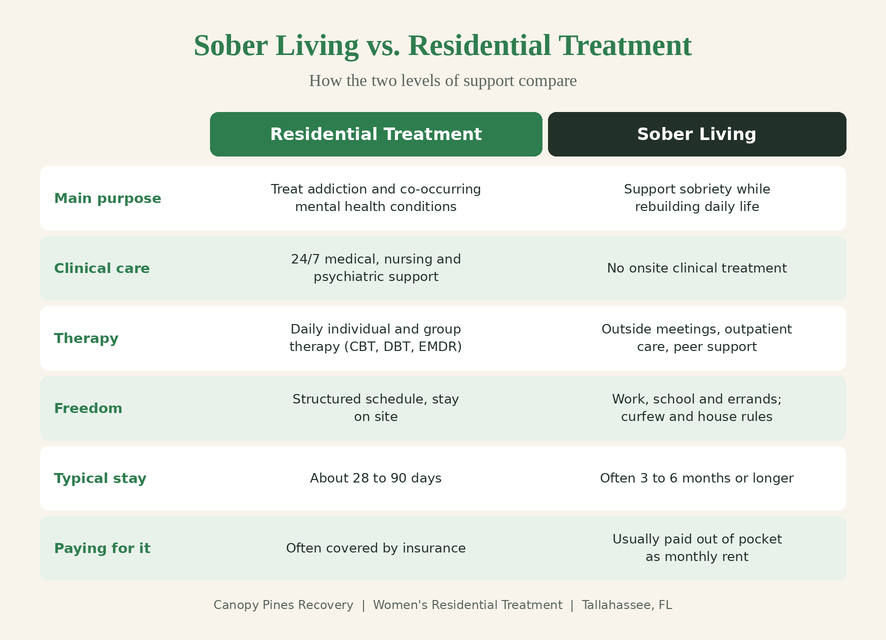
The core difference is clinical care. Residential treatment is treatment; sober living is supportive housing. Here is how they compare side by side:
Who Benefits Most From Residential Treatment?
Residential treatment is usually the right starting point for someone who:
- Is at risk of dangerous withdrawal.
- Has relapsed after outpatient treatment or sober living.
- Has a co-occurring mental health condition, such as PTSD, depression, or bipolar disorder.
- Lives in a home where substances are present or where they don’t feel safe.
- Can no longer keep up with work, school, or family responsibilities.
Who Benefits Most From Sober Living?
Sober living tends to work best for someone who:
- Has completed detox, residential treatment, or a partial hospitalization program.
- Is medically and emotionally stable.
- Needs structure and accountability before returning home.
- Is working, in school, or attending outpatient therapy.
Sober Living vs. Residential Treatment for Women
Women face distinct challenges in recovery. According to NIDA, women can progress more quickly from first use to addiction and often carry histories of trauma, anxiety, or depression. That’s part of why treatment is different for women.
Residential treatment’s strength for women is a safe, women-only setting with trauma-informed therapy, where underlying mental health conditions can be treated alongside addiction. Sober living’s strength is a community of women who share the same goal, which builds independence and connection after treatment. Used in sequence, with aftercare planning connecting them, the two give women the best chance at lasting recovery.
How to Choose the Right Level of Care
- Get a professional assessment. An addiction specialist can match the person’s needs to the right level of care.
- Start with the level of care the person needs medically. It is easier to step down from residential treatment than to step up after a relapse.
- Plan the next step before discharge, including outpatient therapy and housing.
Healthcare professionals can use our professional referral process to coordinate admission for a patient.
FAQ
Is sober living considered addiction treatment?
No. Sober living is supportive housing. It does not provide medical care or therapy onsite, so residents usually pair it with outpatient treatment.
Does insurance cover sober living?
Usually not. Residents typically pay rent out of pocket, while residential treatment is often covered by health insurance.